Quick answer
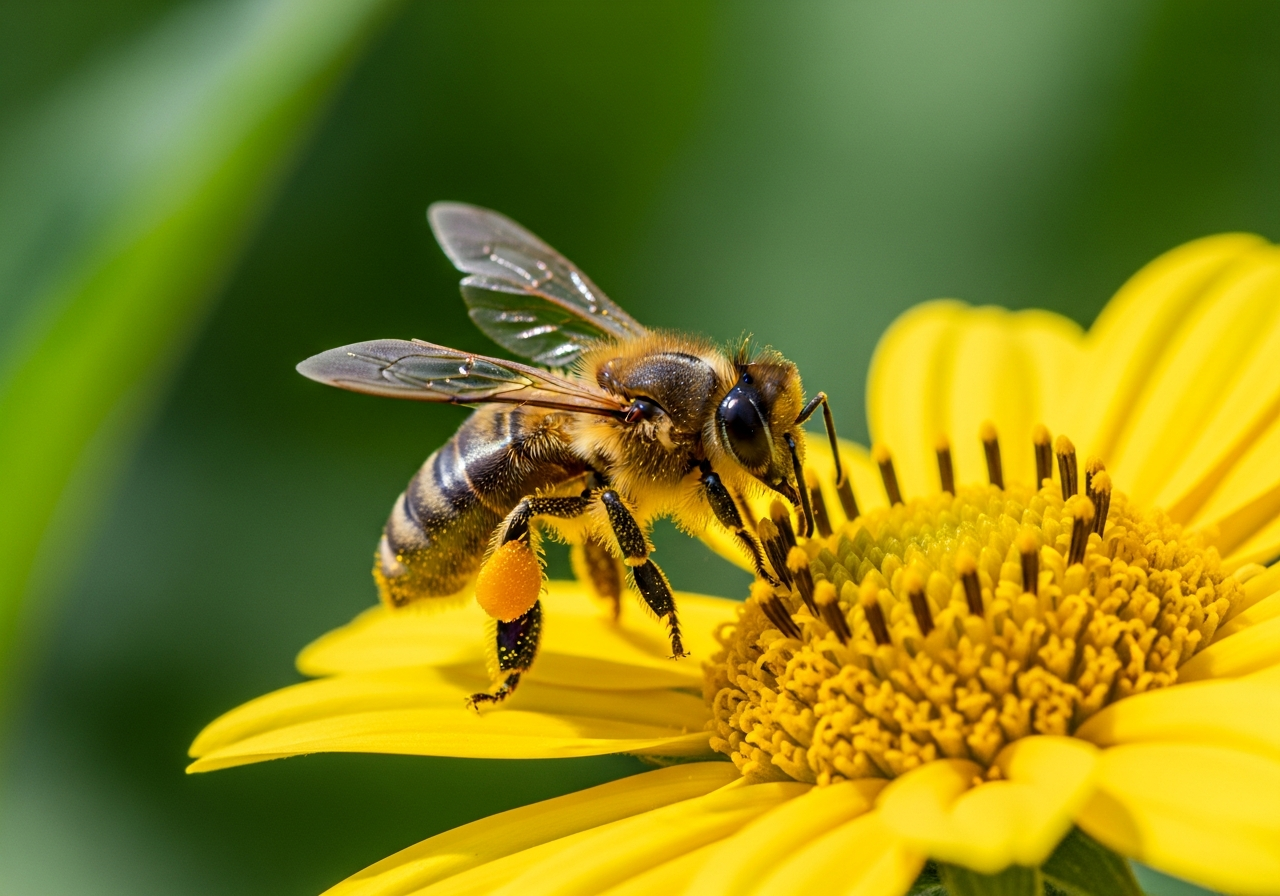
The honey bee is a social insect that lives in colonies of tens of thousands, built around a single egg-laying queen. Honey bees pollinate a large share of the crops people rely on, make honey from flower nectar, and communicate the location of food through a "waggle dance." Worker bees live only a few weeks in summer, while a queen can live several years.
Key takeaway
The honey bee is a social insect that lives in colonies of tens of thousands, built around a single egg-laying queen. Honey bees pollinate a large share of the crops people rely on, make honey from flower nectar, and communicate the location of food through a "waggle dance." Worker bees live only a few weeks in summer, while a queen can live several years.
Honey Bee overview
Honey Bee (Apis mellifera) is a insect listed here as Not Evaluated. Typical weight about 0.0001 kg; lifespan around Workers ~6 weeks; queens 2–5 years.
Honey Bee ecology
Diet: Nectar and pollen. Habitat: Worldwide wherever flowering plants grow. Movement and social systems reflect those pressures across the native range.
Honey Bees and people
Learn before you travel or keep related pets. Wild honey bees are not toys; captive care needs species-specific husbandry.
Status and further reading
Conservation label in our guides: Not Evaluated. See the full Honey Bee profile for taxonomy, FAQs, and related topic guides on this site.
Life in the colony
A honey bee colony is a single tightly organized society. One queen lays all the eggs, thousands of female workers forage, build comb, feed young, and defend the hive, and male drones exist mainly to mate. Tasks shift as a worker ages, from cleaning and nursing inside the hive to foraging outside.
Pollination and honey
As bees move between flowers collecting nectar and pollen, they transfer pollen and fertilize plants. This pollination underpins a large portion of global food crops. Back at the hive, bees convert nectar into honey, a stored food that sustains the colony through times when flowers are scarce.
Sources
Honey Bee FAQs
What are key facts about honey bees?
The honey bee is a social insect that lives in colonies of tens of thousands, built around a single egg-laying queen. Honey bees pollinate a large share of the crops people rely on, make honey from flower nectar, and communicate the location of food through a "waggle dance." Worker bees live only a few weeks in summer, while a queen can live several years.
What is the scientific name of the honey bee?
Apis mellifera — used in research and conservation listings for honey bees.
What do honey bees eat?
Honey Bees eat nectar and pollen, with seasonal and regional variation in Worldwide wherever flowering plants grow.
Where do honey bees live?
They are associated with Worldwide wherever flowering plants grow. Local presence depends on food, cover, and human land use.
What is the conservation status of honey bees?
Listed in our guides as Not Evaluated. Check the IUCN Red List and national assessments for the latest formal category.