Quick answer
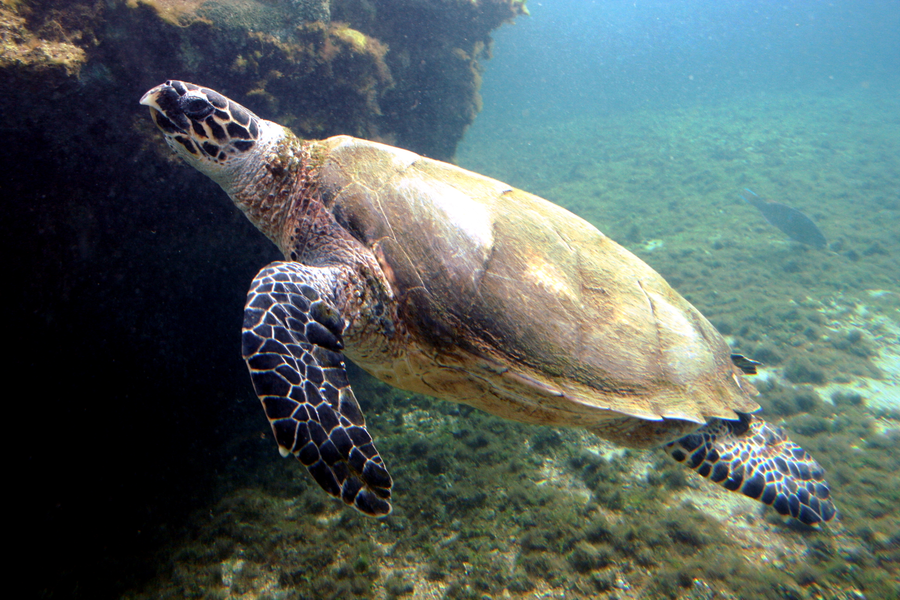
Hawksbills specialise on reef sponges, reached with a hawk-like beak in coral crevices. They are not seagrass grazers and not sea-snakes. Never feed wild turtles. Figures checked 13 August 2026.
What do hawksbills actually eat?
Sponges first, plus other reef invertebrates. “Carnivore — sponges, jellyfish, algae, and anemones” without the sponge-specialist catch was the template line. They are not adult green turtles on seagrass.
How do hawksbills forage?
The pointed beak pries sponges from crevices that a blunt green-turtle jaw cannot reach. They work reefs by day. A feeding frenzy at a tourist boat is habituation, not natural foraging.
What do they do to the food web?
Eating sponges reduces sponge takeover of coral. That is why they are called reef gardeners. Empty reefs and missing adults break that role. Diet conservation is reef conservation.
Should you feed wild hawksbills?
No. Never feed wild hawksbills. Bycatch and egg harvest are the human story, not a picnic. Handouts create the next boat strike.
Where is this diet even possible?
Tropical coral reefs worldwide, with nesting on tropical beaches. A sponge menu does not make them sea-snakes and does not put them on a tiger map.
Does the body lock the menu?
Yes. WARN’s sea-turtle appeal describes proposed partner work — not nesting beaches.
Sources
Hawksbill Sea Turtle FAQs
What do hawksbill turtles eat?
Adults specialise on reef sponges, reached with a hawk-like beak in coral crevices. They also take other reef invertebrates. They are not seagrass grazers like adult green turtles and not sea-snakes. Never feed wild turtles. Figures checked 13 August 2026.
Do they eat jellyfish like other turtles?
They can take jellyfish and similar prey, but the conservation diet is sponges on reefs. Mixing them with leatherbacks or greens mixes the food web. Plastic bags that look like jellyfish are a separate injury, not a menu item they should be offered.
How does diet link to conservation?
Empty reefs cannot hold a sponge specialist. Tortoiseshell demand removes the adults that keep sponges in check. The species is Critically Endangered (IUCN 2008). A snorkel feeding station is not restoration. Do not map them to a tiger or orangutan appeal.
What actually helps their food web?
Standing reefs and less bycatch. World Animal Rescue Network’s sea-turtle appeal describes proposed partner coastal work — not nesting beaches. Never offer fish scraps to a wild hawksbill. They are turtles, not sea-snakes, and not a tiger appeal.
Who this page is for. This page is about wild diet. Skip it if you need a captive feeding plan from a veterinarian.