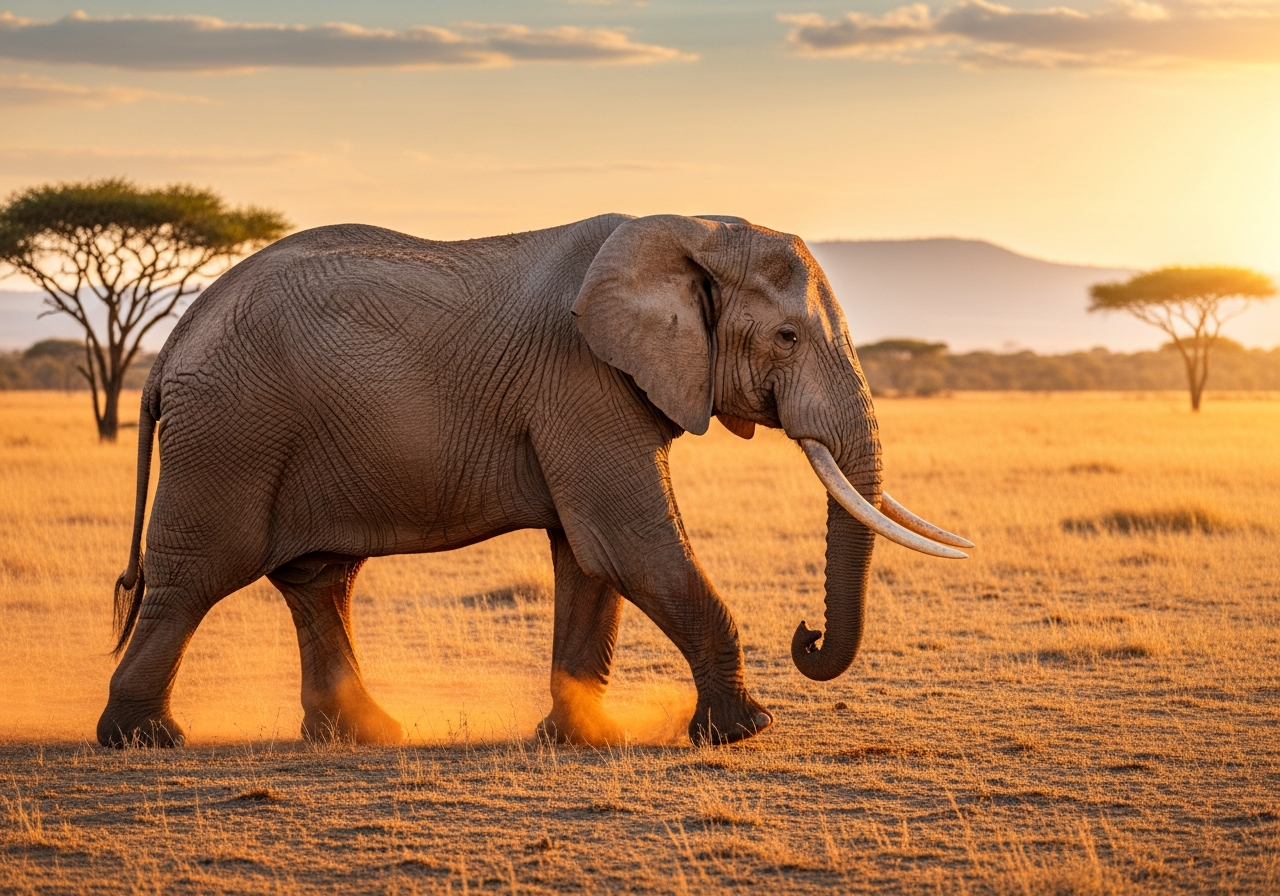
Quick answer
Wild African elephants often live about 60–70 years. Ivory, drought and lost corridors cut many lives shorter. This slug is the African elephant, not Asia. Savanna Loxodonta africana is Endangered; forest L. cyclotis is Critically Endangered. Never feed them. Figures checked 13 August 2026.
How long do African elephants live in the wild?
Treat 60–70 years as a planning range for animals that reach old age. Many never do. Body size (often cited 2,700–6,000 kg for large savanna adults) is not an age table. “Typically 60–70 years” without ivory was the thin version of this page.
What shortens African elephant lives?
Ivory poaching, snares, conflict after crop raids, drought without corridors, and fences that trap families. Ranking threats changes by country. A Botswana drought is not a Central African ivory network. Predation on healthy adults is rare relative to people.
What helps African elephants live longer?
Connected habitat, water, and farmers who are not forced into revenge. Captive veterinary care extends some lives; it does not replace range. Never bait wild elephants. Riding and bathing attractions are not longevity programmes.
How do life stages change the risk?
Calves die first when matriarchs are shot. Dispersing bulls hit fences and guns. Older females carry drought knowledge; losing them is a multi-year hole. Dental wear is a field clue, not a zoo birthday.
Do tusks shorten lives?
They are elongated incisors used for digging and stripping bark. They also make elephants a target. A trunk with tens of thousands of muscle units cannot out-walk a poaching network.
Why do Endangered and Critically Endangered still truncate averages?
Because ivory and fragmentation still kill faster than a 60–70 year label implies. Savanna and forest elephants are assessed separately — do not flatten both into Loxodonta africana. WARN’s elephant appeal describes proposed partner-led rescue, not a Kruger nursery..
Sources
African Elephant FAQs
How long do African elephants live?
Wild African elephants often live about 60–70 years if they reach old age. Ivory, drought and lost corridors cut many lives shorter. Captives with veterinary care can exceed that range; a named zoo birthday is not a Kruger census. This slug is the African elephant, not Asia.
Do savanna and forest elephants live the same span?
Treat the same planning range. The listings differ: savanna Loxodonta africana is Endangered; forest L. cyclotis is Critically Endangered. Do not flatten both into one Latin name. Poaching that removes matriarchs truncates family knowledge — and calf survival — faster than a 60–70 year label implies.
What shortens elephant lives?
Ivory poaching, snares, conflict killing, drought without corridors, and habitat fences. Predation on healthy adults is not the main African story. “Listed in our guides as Endangered” was the thin status line; it did not name those killers or split savanna from forest elephants.
What actually helps them live longer?
Connected habitat, less ivory demand, and families that keep their oldest females. Never feed wild elephants. World Animal Rescue Network’s elephant appeal describes proposed partner-led rescue — not Kruger elephant camps..
Who this page is for. This page is a species lifespan range. Skip it if you need a prognosis for one named animal.