Quick answer
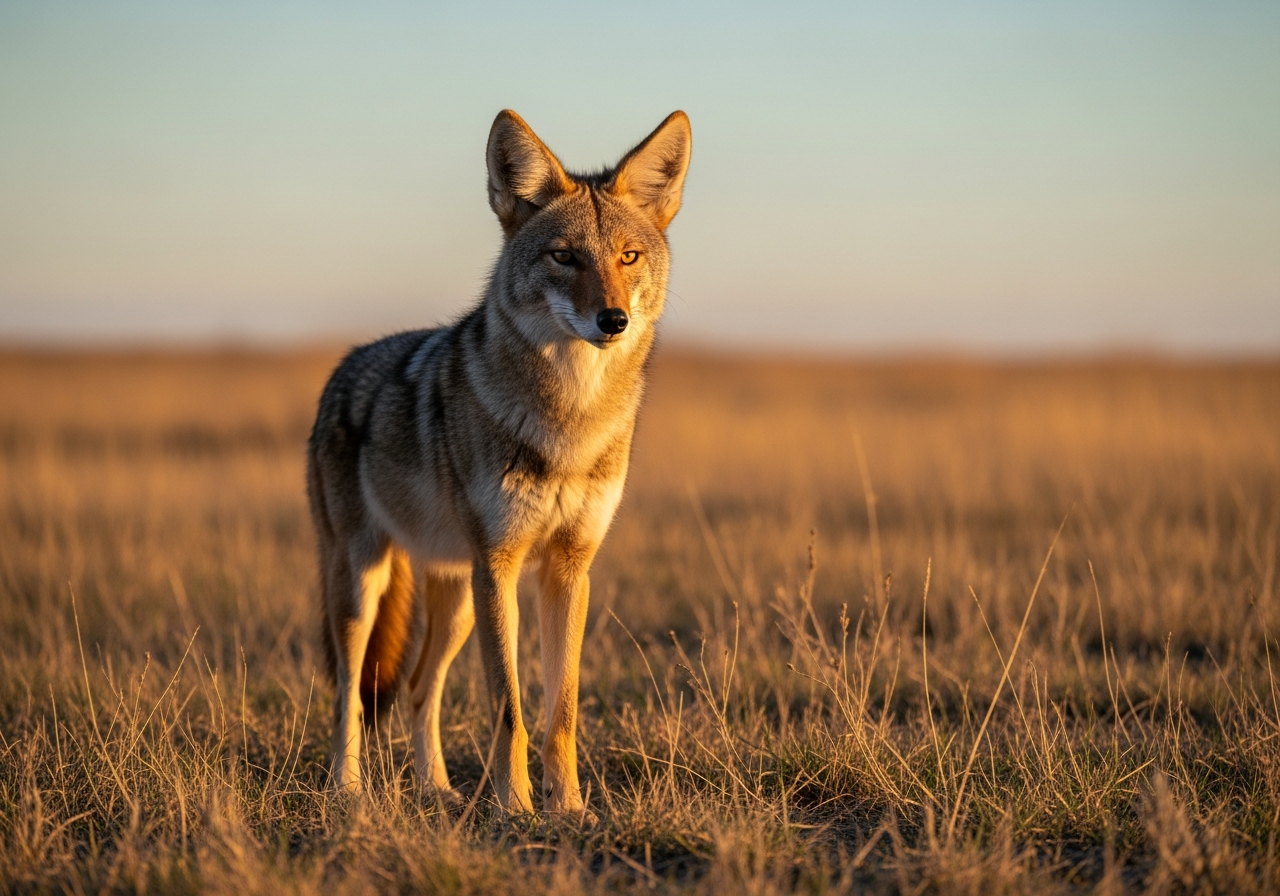
The coyote is a highly adaptable wild dog native to North America, smaller and slimmer than a wolf, with tawny-grey fur, pointed ears, and a bushy tail. Famous for its yipping, howling chorus, it thrives everywhere from deserts and prairies to the middle of large cities. Coyotes are omnivores, can run up to about 64 km/h (40 mph), and typically live around 10 years in the wild.
Key takeaway
The coyote is a highly adaptable wild dog native to North America, smaller and slimmer than a wolf, with tawny-grey fur, pointed ears, and a bushy tail. Famous for its yipping, howling chorus, it thrives everywhere from deserts and prairies to the middle of large cities. Coyotes are omnivores, can run up to about 64 km/h (40 mph), and typically live around 10 years in the wild.
Coyote overview
Coyote (Canis latrans) is a mammal listed here as Least Concern. Typical weight 7–20 kg (15–44 lb); lifespan around Around 10 years wild (up to 14).
Coyote ecology
Diet: Omnivore (rodents, rabbits, deer, fruit). Habitat: Prairie, desert, forest, mountains, cities. Movement and social systems reflect those pressures across the native range.
Coyotes and people
Learn before you travel or keep related pets. Wild coyotes are not toys; captive care needs species-specific husbandry.
Status and further reading
Conservation label in our guides: Least Concern. See the full Coyote profile for taxonomy, FAQs, and related topic guides on this site.
Adaptability and intelligence
Few large predators have adapted to human change as well as the coyote. As wolves were removed from much of North America, coyotes expanded their range across the entire continent, including into major cities such as Chicago and Los Angeles. They are intelligent and flexible, adjusting their diet, activity times, and social behaviour to local conditions — becoming more nocturnal and secretive where people are common.
Diet and hunting
Coyotes are omnivores that hunt small mammals such as mice, voles, and rabbits, but they will also take birds, reptiles, insects, carrion, and fruit, and occasionally cooperate to bring down larger prey like deer. This broad diet lets them survive almost anywhere. In urban areas they also scavenge food waste, which can draw them closer to people.
Sources
Coyote FAQs
What are key facts about coyotes?
The coyote is a highly adaptable wild dog native to North America, smaller and slimmer than a wolf, with tawny-grey fur, pointed ears, and a bushy tail. Famous for its yipping, howling chorus, it thrives everywhere from deserts and prairies to the middle of large cities. Coyotes are omnivores, can run up to about 64 km/h (40 mph), and typically live around 10 years in the wild.
What is the scientific name of the coyote?
Canis latrans — used in research and conservation listings for coyotes.
What do coyotes eat?
Coyotes eat rodents, rabbits, deer and fruit, with seasonal and regional variation in Prairie, desert, forest, mountains, cities.
Where do coyotes live?
They are associated with Prairie, desert, forest, mountains, cities. Local presence depends on food, cover, and human land use.
What is the conservation status of coyotes?
Listed in our guides as Least Concern. Check the IUCN Red List and national assessments for the latest formal category.