Quick answer
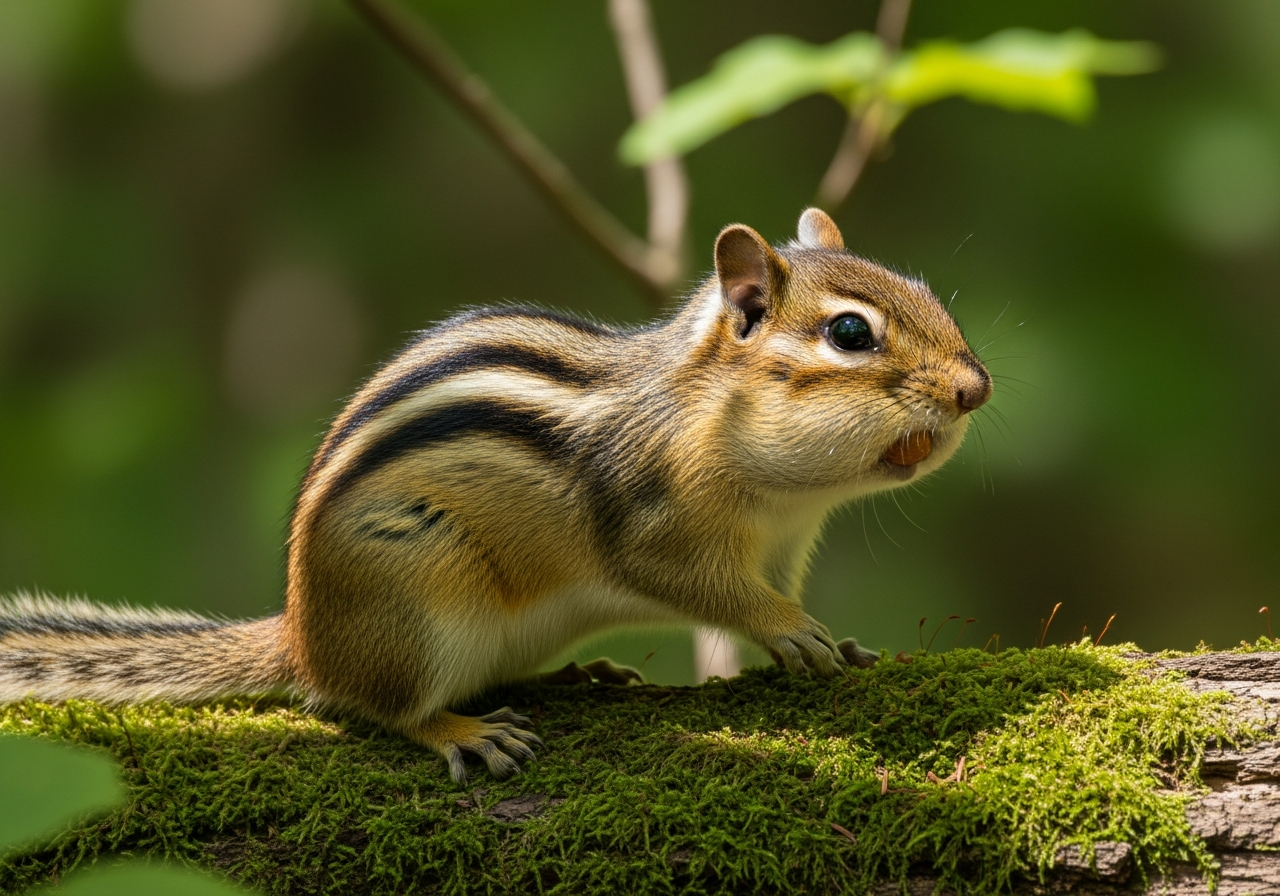
Chipmunks are small, striped members of the squirrel family native mainly to North America. The eastern chipmunk has bold dark-and-cream stripes down its back, large cheek pouches for carrying food, and lives in burrows. It hoards seeds and nuts for winter, spends the coldest months in a sleepy, torpid state underground, and typically lives 2 to 3 years in the wild.
Key takeaway
Chipmunks are small, striped members of the squirrel family native mainly to North America. The eastern chipmunk has bold dark-and-cream stripes down its back, large cheek pouches for carrying food, and lives in burrows. It hoards seeds and nuts for winter, spends the coldest months in a sleepy, torpid state underground, and typically lives 2 to 3 years in the wild.
Chipmunk overview
Chipmunk (Tamias striatus) is a mammal listed here as Least Concern. Typical weight 70–140 g (2.5–5 oz); lifespan around 2–3 years wild (up to 8).
Chipmunk ecology
Diet: Omnivore (seeds, nuts, fruit, insects). Habitat: Deciduous forest, woodland edges, suburbs. Movement and social systems reflect those pressures across the native range.
Chipmunks and people
Learn before you travel or keep related pets. Wild chipmunks are not toys; captive care needs species-specific husbandry.
Status and further reading
Conservation label in our guides: Least Concern. See the full Chipmunk profile for taxonomy, FAQs, and related topic guides on this site.
Cheek pouches and hoarding
A chipmunk's most useful tool is its pair of stretchy cheek pouches, which can expand to carry surprising quantities of seeds and nuts back to the burrow — a single chipmunk can stash thousands of food items over a season. Rather than building up body fat like a true hibernator, it relies on these underground larders to survive winter, waking periodically to eat from its stored supplies.
Burrows and winter torpor
Eastern chipmunks dig extensive burrow systems with tunnels, sleeping chambers, and storage rooms, often with well-hidden entrances. Through the coldest months they enter torpor, dropping their body temperature and heart rate to save energy, but they are not deeply asleep all winter — they rouse to feed on their hoard and may emerge on mild days.
Sources
Chipmunk FAQs
What are key facts about chipmunks?
Chipmunks are small, striped members of the squirrel family native mainly to North America. The eastern chipmunk has bold dark-and-cream stripes down its back, large cheek pouches for carrying food, and lives in burrows. It hoards seeds and nuts for winter, spends the coldest months in a sleepy, torpid state underground, and typically lives 2 to 3 years in the wild.
What is the scientific name of the chipmunk?
Tamias striatus — used in research and conservation listings for chipmunks.
What do chipmunks eat?
Chipmunks eat seeds, nuts, fruit and insects, with seasonal and regional variation in Deciduous forest, woodland edges, suburbs.
Where do chipmunks live?
They are associated with Deciduous forest, woodland edges, suburbs. Local presence depends on food, cover, and human land use.
What is the conservation status of chipmunks?
Listed in our guides as Least Concern. Check the IUCN Red List and national assessments for the latest formal category.