Quick answer
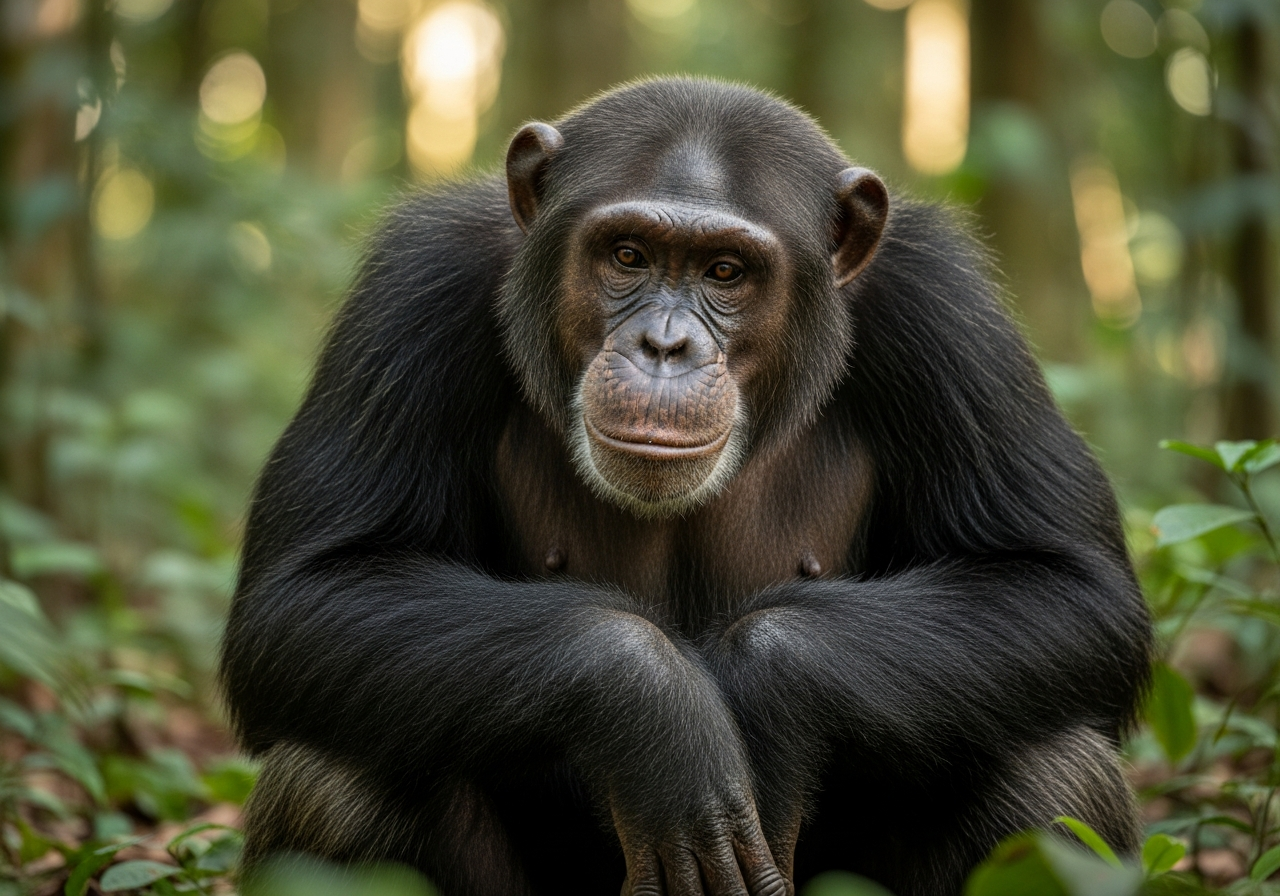
The chimpanzee is a great ape native to the forests and savannas of central and western Africa and one of humanity's closest living relatives, sharing around 98% of our DNA. Chimps are highly intelligent, use and make tools, and live in complex social groups. They typically live 40 to 50 years in the wild and are listed as Endangered.
Key takeaway
The chimpanzee is a great ape native to the forests and savannas of central and western Africa and one of humanity's closest living relatives, sharing around 98% of our DNA. Chimps are highly intelligent, use and make tools, and live in complex social groups. They typically live 40 to 50 years in the wild and are listed as Endangered.
Chimpanzee overview
Chimpanzee (Pan troglodytes) is a mammal listed here as Endangered. Typical weight 30–60 kg (66–130 lb); lifespan around 40–50 years in the wild.
Chimpanzee ecology
Diet: Omnivore. Habitat: Tropical forest and wooded savanna. Movement and social systems reflect those pressures across the native range.
Chimpanzees and people
Learn before you travel or keep related pets. Wild chimpanzees are not toys; captive care needs species-specific husbandry.
Status and further reading
Conservation label in our guides: Endangered. See the full Chimpanzee profile for taxonomy, FAQs, and related topic guides on this site.
Tool use and intelligence
Chimpanzees are among the most intelligent animals on Earth. They make and use tools, fishing for termites with stripped twigs, cracking nuts with stone hammers, and using chewed leaves as sponges. Different communities pass down their own tool traditions, a form of culture once thought to be uniquely human.
Sources
Chimpanzee FAQs
What are key facts about chimpanzees?
The chimpanzee is a great ape native to the forests and savannas of central and western Africa and one of humanity's closest living relatives, sharing around 98% of our DNA. Chimps are highly intelligent, use and make tools, and live in complex social groups. They typically live 40 to 50 years in the wild and are listed as Endangered.
What is the scientific name of the chimpanzee?
Pan troglodytes — used in research and conservation listings for chimpanzees.
What do chimpanzees eat?
Chimpanzees are described as omnivores, with seasonal and regional variation in Tropical forest and wooded savanna.
Where do chimpanzees live?
They are associated with Tropical forest and wooded savanna. Local presence depends on food, cover, and human land use.
What is the conservation status of chimpanzees?
Listed in our guides as Endangered. Check the IUCN Red List and national assessments for the latest formal category.
Social life
Chimps live in communities of dozens of individuals with shifting alliances, hierarchies, and politics. They communicate through a rich range of calls, facial expressions, and gestures, and they groom one another to build and maintain bonds. Cooperation, sharing, and even reconciliation after fights are common.