Quick answer
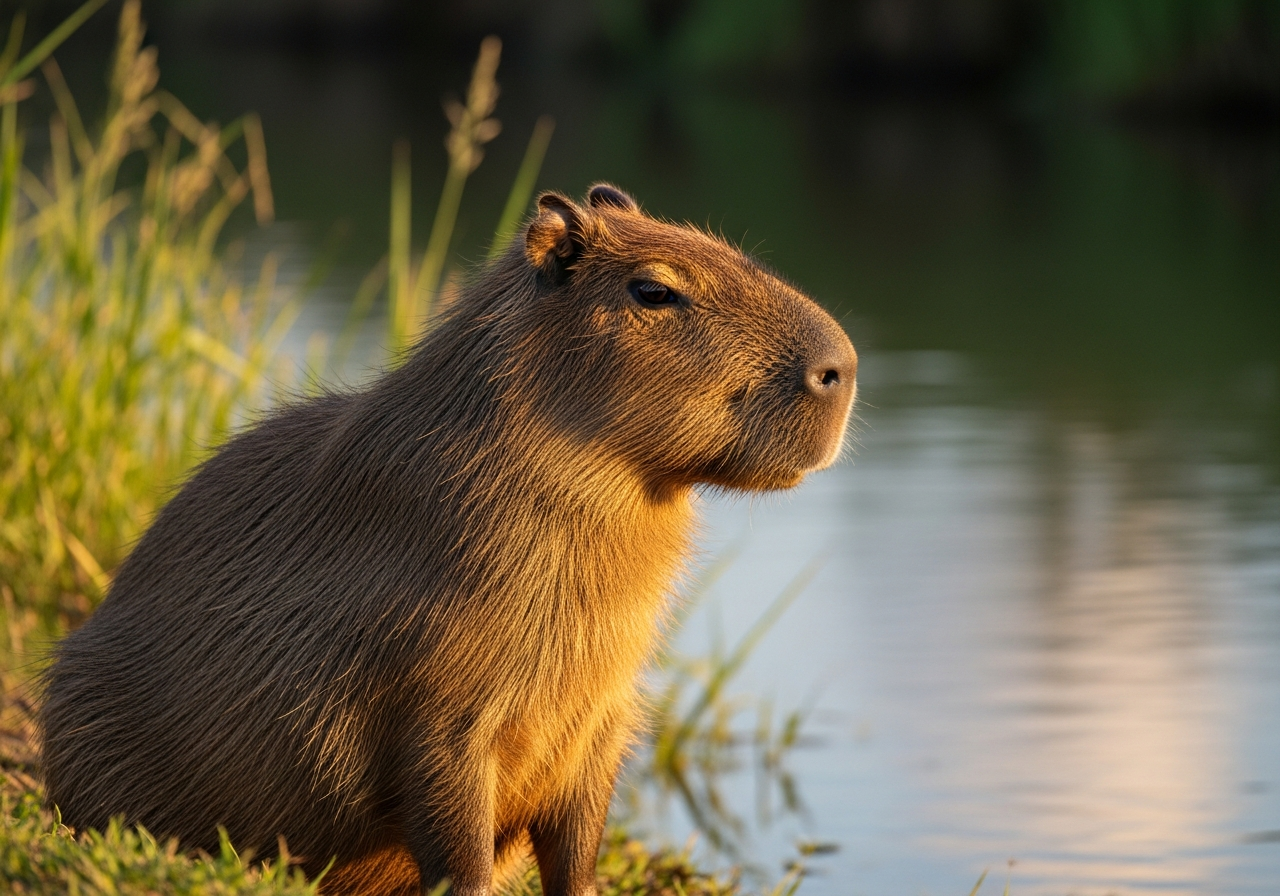
The capybara is the largest living rodent, a barrel-shaped, semi-aquatic herbivore from the wetlands and grasslands of South America. Adults can weigh up to 65 kg (143 lb) and stand about 0.6 m (2 ft) tall, with partially webbed feet for swimming. Highly social, capybaras live in groups near water, grazing on grasses and aquatic plants, and are known for their remarkably calm, friendly demeanor. In the wild they typically live 8 to 10 years.
Key takeaway
The capybara is the largest living rodent, a barrel-shaped, semi-aquatic herbivore from the wetlands and grasslands of South America. Adults can weigh up to 65 kg (143 lb) and stand about 0.6 m (2 ft) tall, with partially webbed feet for swimming. Highly social, capybaras live in groups near water, grazing on grasses and aquatic plants, and are known for their remarkably calm, friendly demeanor. In the wild they typically live 8 to 10 years.
Capybara overview
Capybara (Hydrochoerus hydrochaeris) is a mammal listed here as Least Concern. Typical weight 35–65 kg (77–143 lb); lifespan around 8–10 years in the wild.
Capybara ecology
Diet: Herbivore (grazer). Habitat: Wetlands, riverbanks, and grasslands. Movement and social systems reflect those pressures across the native range.
Capybaras and people
Learn before you travel or keep related pets. Wild capybaras are not toys; captive care needs species-specific husbandry.
Status and further reading
Conservation label in our guides: Least Concern. See the full Capybara profile for taxonomy, FAQs, and related topic guides on this site.
Diet and digestion
Capybaras are grazing herbivores that feed mainly on grasses and aquatic plants, supplementing their diet with fruit and bark in the dry season. Like rabbits, they practice coprophagy, eating some of their own droppings to extract more nutrients from tough, fibrous plants. Their teeth grow continuously to cope with the wear of grinding vegetation. An adult can eat several kilograms of grass each day.
Sources
Capybara FAQs
What are key facts about capybaras?
The capybara is the largest living rodent, a barrel-shaped, semi-aquatic herbivore from the wetlands and grasslands of South America. Adults can weigh up to 65 kg (143 lb) and stand about 0.6 m (2 ft) tall, with partially webbed feet for swimming. Highly social, capybaras live in groups near water, grazing on grasses and aquatic plants, and are known for their remarkably calm, friendly demeanor. In the wild they typically live 8 to 10 years.
What is the scientific name of the capybara?
Hydrochoerus hydrochaeris — used in research and conservation listings for capybaras.
What do capybaras eat?
Capybaras eat grazer, with seasonal and regional variation in Wetlands, riverbanks, and grasslands.
Where do capybaras live?
They are associated with Wetlands, riverbanks, and grasslands. Local presence depends on food, cover, and human land use.
What is the conservation status of capybaras?
Listed in our guides as Least Concern. Check the IUCN Red List and national assessments for the latest formal category.