Quick answer
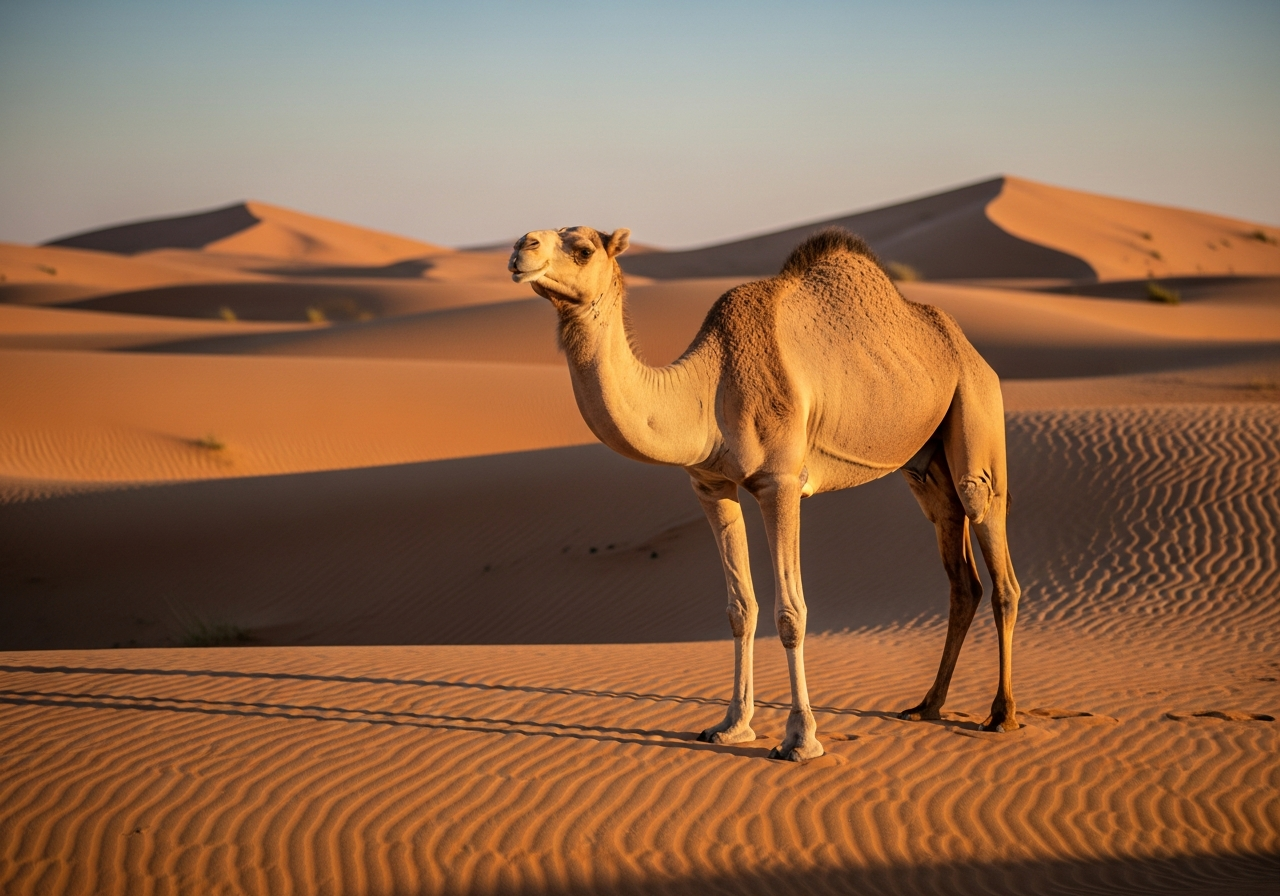
The camel is a large desert-adapted mammal famous for its humps, which store fat rather than water and let it survive long periods without food. The single-humped dromedary lives in the deserts of North Africa and the Middle East, while the two-humped Bactrian camel inhabits the cold deserts of Central Asia. Camels can go for weeks without drinking and then take in over 100 liters at once, and they have long served people as pack animals and a source of milk, meat, and wool. Domestic camels often live 40 to 50 years.
Key takeaway
The camel is a large desert-adapted mammal famous for its humps, which store fat rather than water and let it survive long periods without food. The single-humped dromedary lives in the deserts of North Africa and the Middle East, while the two-humped Bactrian camel inhabits the cold deserts of Central Asia. Camels can go for weeks without drinking and then take in over 100 liters at once, and they have long served people as pack animals and a source of milk, meat, and wool. Domestic camels often live 40 to 50 years.
Camel overview
Camel (Camelus dromedarius) is a mammal listed here as Least Concern. Typical weight 400–700 kg (880–1,540 lb); lifespan around 40–50 years.
Camel ecology
Diet: Herbivore. Habitat: Deserts and arid plains. Movement and social systems reflect those pressures across the native range.
Camels and people
Learn before you travel or keep related pets. Wild camels are not toys; captive care needs species-specific husbandry.
Status and further reading
Conservation label in our guides: Least Concern. See the full Camel profile for taxonomy, FAQs, and related topic guides on this site.
Desert adaptations
Camels are superbly adapted to harsh deserts. Their humps store fat that can be broken down for energy and water when food is scarce, and they can tolerate large swings in body temperature to avoid sweating. They have thick lips for eating thorny plants, double rows of long eyelashes and closable nostrils to keep out blowing sand, and broad padded feet that spread their weight on loose ground. They can lose a third o
Diet and feeding
Camels are herbivores that browse and graze on grasses, leaves, and tough, thorny desert shrubs that many animals avoid. Their leathery mouths and specialized digestion let them process dry, salty, and spiny vegetation. Like cattle, they are ruminants that chew cud to extract maximum nutrients from poor forage. When food and water are plentiful they build up the fat reserves stored in their humps.
Sources
Camel FAQs
What are key facts about camels?
The camel is a large desert-adapted mammal famous for its humps, which store fat rather than water and let it survive long periods without food. The single-humped dromedary lives in the deserts of North Africa and the Middle East, while the two-humped Bactrian camel inhabits the cold deserts of Central Asia. Camels can go for weeks without drinking and then take in over 100 liters at once, and they have long served people as pack animals and a source of milk, meat, and wool. Domestic camels often live 40 to 50 years.
What is the scientific name of the camel?
Camelus dromedarius — used in research and conservation listings for camels.
What do camels eat?
Camels are described as herbivores, with seasonal and regional variation in Deserts and arid plains.
Where do camels live?
They are associated with Deserts and arid plains. Local presence depends on food, cover, and human land use.
What is the conservation status of camels?
Listed in our guides as Least Concern. Check the IUCN Red List and national assessments for the latest formal category.