Quick answer
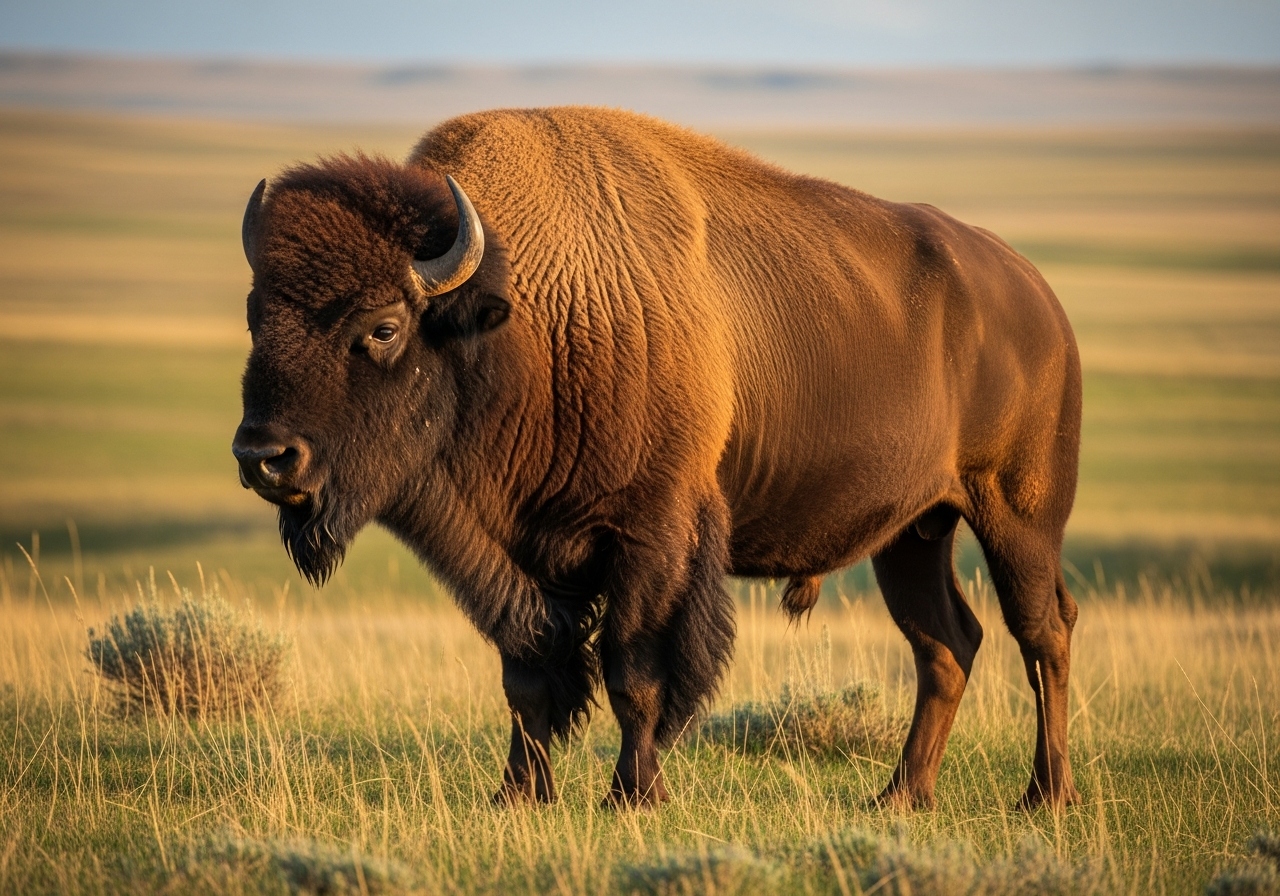
The American bison is North America's largest land mammal, with big bulls weighing up to 1,000 kg (2,200 lb) and standing nearly 2 m (6 ft) at the shoulder. Once numbering in the tens of millions across the Great Plains, bison were hunted nearly to extinction in the 1800s and now live mostly in parks and reserves. They are grazing herbivores that roam grasslands in herds and can run up to 55 km/h (35 mph). Wild bison typically live 15 to 20 years.
Key takeaway
The American bison is North America's largest land mammal, with big bulls weighing up to 1,000 kg (2,200 lb) and standing nearly 2 m (6 ft) at the shoulder. Once numbering in the tens of millions across the Great Plains, bison were hunted nearly to extinction in the 1800s and now live mostly in parks and reserves. They are grazing herbivores that roam grasslands in herds and can run up to 55 km/h (35 mph). Wild bison typically live 15 to 20 years.
American Bison overview
American Bison (Bison bison) is an mammal listed here as Near Threatened. Typical weight 450–1,000 kg (1,000–2,200 lb); lifespan around 15–20 years in the wild.
American Bison ecology
Diet: Herbivore (grazer). Habitat: Grasslands, plains, and prairies. Movement and social systems reflect those pressures across the native range.
American Bisons and people
Learn before you travel or keep related pets. Wild american bisons are not toys; captive care needs species-specific husbandry.
Status and further reading
Conservation label in our guides: Near Threatened. See the full American Bison profile for taxonomy, FAQs, and related topic guides on this site.
Behavior and herds
Bison are social animals that live in herds, with cows and young in one group and bulls often in smaller bachelor groups or alone outside the breeding season. During the summer rut, bulls bellow, wallow in dust, and clash heads to compete for mates. Despite their bulk, bison are surprisingly fast and agile, capable of sprinting at 55 km/h (35 mph) and jumping fences. They use wallows, shallow dust pits, to deter inse
Diet and grazing
Bison are grazing herbivores that feed mainly on grasses and sedges, moving across the plains as they crop vegetation. Their grazing shapes grassland ecosystems, promoting plant diversity and creating habitat for other species. They have a multi-chambered stomach that ferments tough plant material, and they ruminate, chewing cud, to extract nutrients. In winter they use their massive heads to sweep snow aside and rea
Sources
American Bison FAQs
What are key facts about american bisons?
The American bison is North America's largest land mammal, with big bulls weighing up to 1,000 kg (2,200 lb) and standing nearly 2 m (6 ft) at the shoulder. Once numbering in the tens of millions across the Great Plains, bison were hunted nearly to extinction in the 1800s and now live mostly in parks and reserves. They are grazing herbivores that roam grasslands in herds and can run up to 55 km/h (35 mph). Wild bison typically live 15 to 20 years.
What is the scientific name of the american bison?
Bison bison — used in research and conservation listings for american bisons.
What do american bisons eat?
American Bisons eat grazer, with seasonal and regional variation in Grasslands, plains, and prairies.
Where do american bisons live?
They are associated with Grasslands, plains, and prairies. Local presence depends on food, cover, and human land use.
What is the conservation status of american bisons?
Listed in our guides as Near Threatened. Check the IUCN Red List and national assessments for the latest formal category.