Largemouth Bass
Micropterus salmoides
Quick answer
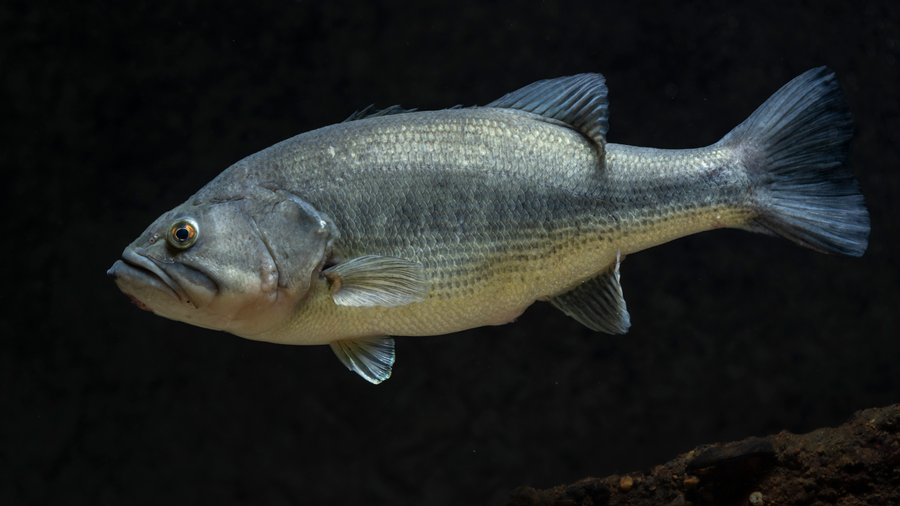
The largemouth bass is a top predator in North American lakes and rivers, named for a jaw extending past the eye. Prized by anglers worldwide, it strikes lures aggressively, grows to 10 kg (22 lb) in rich waters, and has been stocked on every continent except Antarctica for sport fishing.
Largemouth Bass facts at a glance
| Scientific name | Micropterus salmoides |
|---|---|
| Diet | Carnivore — fish, crayfish, frogs, and insects |
| Habitat | Warm lakes, ponds, reservoirs, and slow rivers with cover |
| Lifespan | 10–16 years in the wild |
| Weight | 0.5–10 kg (1–22 lb); most caught fish 1–3 kg |
| Top speed | Explosive ambush strikes from cover |
| Conservation status | Least Concern (IUCN) |
| Kingdom | Animalia |
|---|---|
| Phylum | Chordata |
| Class | Actinopterygii |
| Order | Perciformes |
| Family | Centrarchidae |
| Genus | Micropterus |
Where it lives
Native to eastern and central North America from southern Canada through the Great Lakes and Mississippi basin to Florida; stocked worldwide for sport fishing in warm still waters.
What is a group of largemouth basses called?
Group name (collective noun)
A group of Largemouth Basses is called a school.
Baby name
A baby Largemouth Bass is called a fry.
Explore more animal collective nouns and baby animal names .
Ambush predator
Largemouth bass hide among lily pads, fallen timber, and weed beds, exploding forward to engulf prey with a cavernous mouth that gives the species its name. They are visual hunters, striking artificial lures that mimic wounded minnows, frogs, and worms.
Nest guarding males
Male bass build and defend circular nests in shallow gravel or sand during spring. They fan silt away, guard eggs against sunfish and crayfish, and protect fry for days after hatching — one of the most dedicated parental behaviours among popular game fish.
Global sport fishing icon
Bass tournaments across the United States draw millions of participants and television audiences. Stocking programmes introduced largemouth bass to Japan, South Africa, and Europe, where they sometimes disrupt native fish communities in warm still waters.
Management and ecology
Native and Least Concern in North America, largemouth bass regulate populations of smaller fish and crayfish. Fisheries managers adjust size and bag limits to maintain trophy fisheries. Invasive where introduced outside their native warm-water range.
Dig deeper into the Largemouth Bass
- Bass Facts 4
Dig deeper into largemouth bass — bass facts 4.
- Bass Facts 5
Dig deeper into largemouth bass — bass facts 5.
- How Long do Bass Live?
Dig deeper into largemouth bass — how long do bass live.
- What do Bass Eat
Dig deeper into largemouth bass — what do bass eat.
- Where do Bass Live?
Dig deeper into largemouth bass — where do bass live.
Explore the Largemouth Bass
Compare
Related Fishs
Did you know? Largemouth Bass facts
- The largemouth bass is a top predator in North American lakes and rivers, named for a jaw extending past the eye.
- Most angler catches are 1–3 kg, but fish over 5 kg are trophies and the world record exceeds 10 kg from a California reservoir.
- Fish, crayfish, frogs, insects, and even small birds or mice near the surface — opportunistic predators that prefer live prey.
- Eastern and central North America from southern Canada through the Great Lakes and Mississippi basin to Florida and northeastern Mexico.
- Largemouth have a jaw extending past the eye and prefer weedy warm water. Smallmouth bass have a jaw that stops at the eye and favour clearer, cooler rocky streams and lakes.
- Conservation: Least Concern (IUCN).
Diet & feeding
Largemouth Bass feeds primarily as a carnivore — fish, crayfish, frogs, and insects. Largemouth bass hide among lily pads, fallen timber, and weed beds, exploding forward to engulf prey with a cavernous mouth that gives the species its name. They are visual hunters, striking artificial lures that mimic wounded minnows,
Adaptations
- Largemouth bass hide among lily pads, fallen timber, and weed beds, exploding forward to engulf prey with a cavernous mouth that gives the species its name. They are visual hunters, striking artificial lures that mimic wounded minnows, frogs, and worms.
- Male bass build and defend circular nests in shallow gravel or sand during spring. They fan silt away, guard eggs against sunfish and crayfish, and protect fry for days after hatching — one of the most dedicated parental behaviours among popular game fish.
Behaviour & ecology
- Largemouth bass hide among lily pads, fallen timber, and weed beds, exploding forward to engulf prey with a cavernous mouth that gives the species its name. They are visual hunters, striking artificial lures that mimic wounded minnows, frogs, and worms.
- Male bass build and defend circular nests in shallow gravel or sand during spring. They fan silt away, guard eggs against sunfish and crayfish, and protect fry for days after hatching — one of the most dedicated parental behaviours among popular game fish.
- Bass tournaments across the United States draw millions of participants and television audiences. Stocking programmes introduced largemouth bass to Japan, South Africa, and Europe, where they sometimes disrupt native fish communities in warm still waters.
Communication
- Lateral-line and visual cues coordinate schooling, courtship, or territorial behaviour.
- Some species produce low-frequency sounds or drumming for spawning or defence.
Habitat & range
Warm lakes, ponds, reservoirs, and slow rivers with cover
Ecological role
Largemouth Bass acts as a predator that helps regulate prey populations and maintain balance in warm lakes, ponds, reservoirs, and slow rivers with cover.
Frequently asked questions about the Largemouth Bass
How big do largemouth bass get?
Most angler catches are 1–3 kg, but fish over 5 kg are trophies and the world record exceeds 10 kg from a California reservoir.
What do largemouth bass eat?
Fish, crayfish, frogs, insects, and even small birds or mice near the surface — opportunistic predators that prefer live prey.
Where are largemouth bass native?
Eastern and central North America from southern Canada through the Great Lakes and Mississippi basin to Florida and northeastern Mexico.
Largemouth vs smallmouth bass?
Largemouth have a jaw extending past the eye and prefer weedy warm water. Smallmouth bass have a jaw that stops at the eye and favour clearer, cooler rocky streams and lakes.
Are largemouth bass good to eat?
Yes — firm white flesh is popular in the American South, though catch-and-release sport fishing dominates in many trophy fisheries.
What is a group of largemouth basses called?
A group of Largemouth Basses is called a school.
What is a baby largemouth bass called?
A baby Largemouth Bass is called a fry.
Sources & references
This guide is compiled and reviewed against established zoological and conservation references. Key sources for the Largemouth Bass:
-
IUCN Red List of Threatened Species
Conservation status (Least Concern) reflects the IUCN Red List category for Micropterus salmoides.
- IUCN Red List — Micropterus salmoides.
Conservation status (Least Concern) and population trends.
- Animal Diversity Web — Micropterus salmoides. University of Michigan Museum of Zoology.
Life history, morphology, and range.
-
Global Animal Guide editorial standards
How we research, source, review, and update every guide for accuracy.