Quick answer
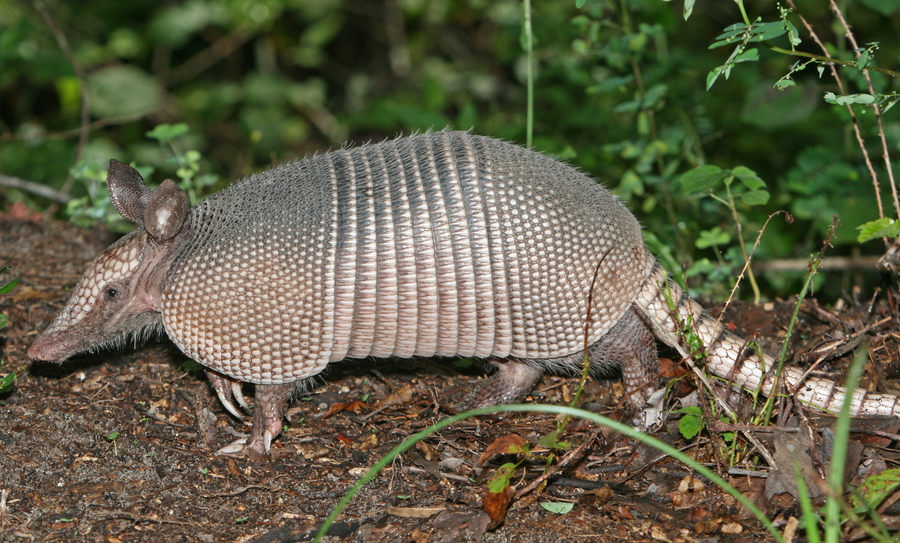
The nine-banded armadillo is the only armadillo species widespread in the United States, recognised by its bony armour plates and ability to jump vertically when startled. It digs for insects and grubs, gives birth to identical quadruplets, and is expanding its range northward.
Key takeaway
The nine-banded armadillo is the only armadillo species widespread in the United States, recognised by its bony armour plates and ability to jump vertically when startled. It digs for insects and grubs, gives birth to identical quadruplets, and is expanding its range northward.
Nine-Banded Armadillo overview
Nine-Banded Armadillo (Dasypus novemcinctus) is a mammal listed here as Least Concern. Typical weight 3–6 kg (6.5–13 lb); lifespan around 12–15 years in the wild.
Nine-Banded Armadillo ecology
Diet: Insectivore — insects, grubs, and other invertebrates. Habitat: Grasslands, forests, and suburbs in the Americas. Movement and social systems reflect those pressures across the native range.
Nine-Banded Armadillos and people
Learn before you travel or keep related pets. Wild nine-banded armadillos are not toys; captive care needs species-specific husbandry.
Status and further reading
Conservation label in our guides: Least Concern. See the full Nine-Banded Armadillo profile for taxonomy, FAQs, and related topic guides on this site.
Armour and anatomy
Armadillos are covered in osteoderms — bony plates fused into bands with flexible skin between. The nine-banded armadillo cannot roll into a complete ball (unlike three-banded South American species). Strong claws excavate burrows and unearth beetle larvae and ants.
Reproduction and quadruplets
Nine-banded armadillos almost always give birth to four genetically identical young from a single fertilised egg. Delayed implantation allows breeding timing to match favourable seasons. Newborns have soft skin that hardens within weeks.
Sources
Nine-Banded Armadillo FAQs
What are key facts about nine-banded armadillos?
The nine-banded armadillo is the only armadillo species widespread in the United States, recognised by its bony armour plates and ability to jump vertically when startled. It digs for insects and grubs, gives birth to identical quadruplets, and is expanding its range northward.
What is the scientific name of the nine-banded armadillo?
Dasypus novemcinctus — used in research and conservation listings for nine-banded armadillos.
What do nine-banded armadillos eat?
Nine-Banded Armadillos eat insects, grubs, and other invertebrates, with seasonal and regional variation in Grasslands, forests, and suburbs in the Americas.
Where do nine-banded armadillos live?
They are associated with Grasslands, forests, and suburbs in the Americas. Local presence depends on food, cover, and human land use.
What is the conservation status of nine-banded armadillos?
Listed in our guides as Least Concern. Check the IUCN Red List and national assessments for the latest formal category.