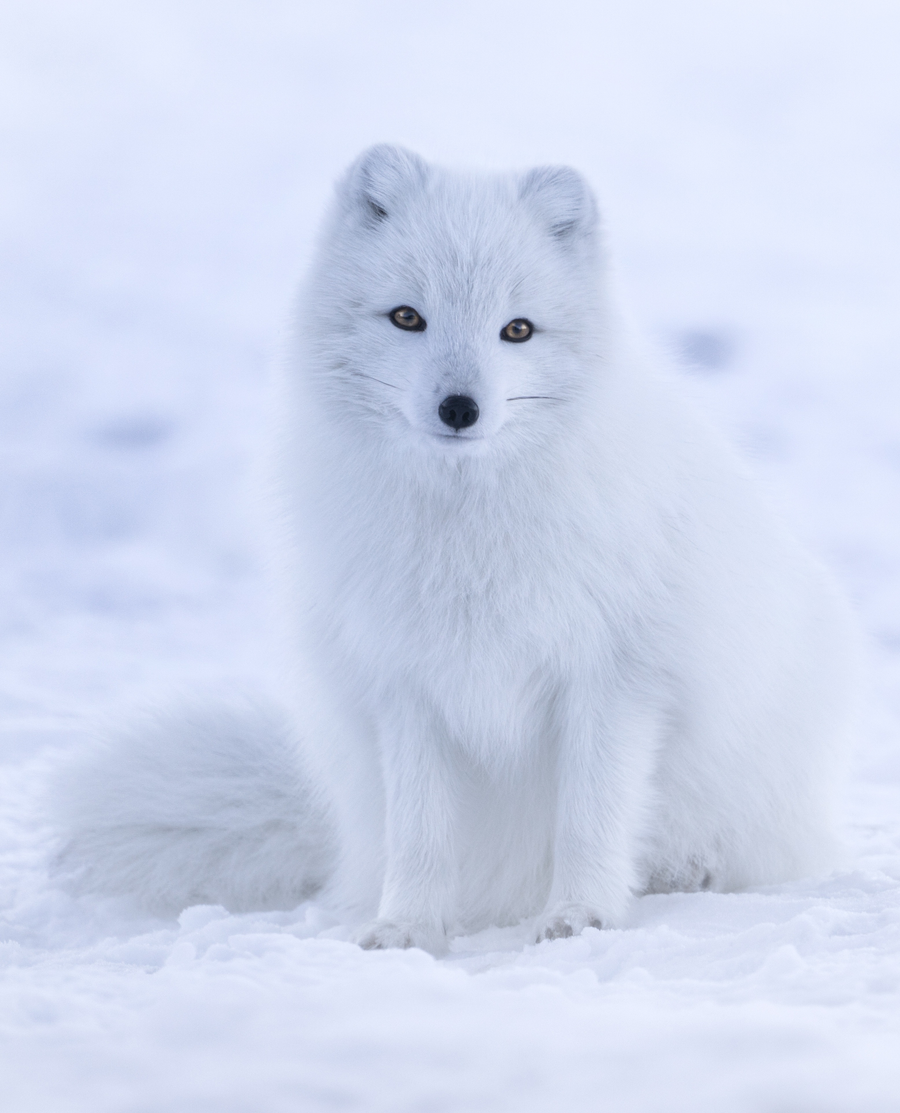
The Arctic fox (Vulpes lagopus) is a mammal of the dog family, Canidae, in the order Carnivora.
Quick answer
The Arctic fox (Vulpes lagopus) is a small, compact fox of the circumpolar tundra that turns white in winter and brown-grey in summer. Weighing just 2.5–9 kg (6–20 lb), it survives temperatures below −50 °C behind the warmest fur of any mammal, and typically lives 3–6 years in the wild.
Top questions about the Arctic Fox
Also available in Español (Zorro ártico)
Arctic Fox facts at a glance
- Weight 3.5 kg
- Length 85 cm
- Top speed 50 km/h
- Lifespan 6 years
| Scientific name | Vulpes lagopus |
|---|---|
| Diet | Lemmings, voles, birds, eggs, fish, carrion, and polar-bear leftovers |
| Habitat | Arctic tundra and coastal sea ice across North America, Greenland, Iceland, and Eurasia |
| Lifespan | 3–6 years in the wild; up to 15 years in captivity |
| Weight | 2.5–9 kg (6–20 lb) |
| Top speed | Up to 50 km/h (31 mph) in short bursts |
| Conservation status | Least Concern (IUCN) |
| Kingdom | Animalia |
|---|---|
| Phylum | Chordata |
| Class | Mammalia |
| Order | Carnivora |
| Family | Canidae |
| Genus | Vulpes |
Where it lives
The arctic fox (Vulpes lagopus) is native to Circumpolar Arctic tundra — Canada, Alaska, Greenland, Iceland, Scandinavia, and Russia. — recorded across North America, Europe, Asia in this guide’s range summary.
For occurrence records, see GBIF species search and sources below.
How big is a arctic fox?
An adult arctic fox measures 85 cm long — about 49% of the height of an average adult person (1.73 m) — and weighs around 3.5 kg, about 5% of an average adult’s body weight (70 kg).
Length vs an average adult’s height (to scale)
Arctic engineering
Everything about the Arctic fox minimises heat loss: a rounded body, short muzzle, small ears, and even fur-covered foot pads — unique among canids. Its multi-layered winter coat is the warmest fur of any mammal, so effective that the fox's metabolism does not rise until temperatures approach −50 °C, and it can rest in the open at far lower temperatures.
Two coats a year
Most Arctic foxes moult from snow-white winter pelage to a brown-grey summer coat that blends with bare tundra. A second, genetically determined 'blue' morph stays charcoal-grey year-round and is commonest in coastal populations such as those of Iceland and the Aleutian Islands. The seasonal colour swap is triggered by day length.
Diet and scavenging
Lemmings and voles are the staple, and fox numbers boom and crash with rodent cycles. Arctic foxes locate prey under snow by sound, then pounce head-first through the crust. They cache surplus food — thousands of seabird eggs in a good season — and trail polar bears across the sea ice to scavenge seal remains.
Wide-ranging travellers
Arctic foxes hold the record for long-distance travel in a land carnivore of their size. In one famous tracking study, a young female covered more than 3,500 km from coastal Norway across the sea ice to Canada in 76 days. Most foxes stay closer to home, defending dens that may be used by generation after generation for centuries.
Raising pups in the cold
Pairs mate for life and breed in spring, timing the litter to coincide with peak rodent abundance. Litters average six to twelve pups but can exceed twenty in lemming years — among the largest of any wild mammal. Both parents guard the den, which is dug into a frost-free slope or esker with many entrances.
Conservation
Globally the Arctic fox is listed as Least Concern, with a healthy circumpolar population. The Fennoscandian population is a stark exception: after historical fur trapping it remains critically small — only a few hundred adults across Norway, Sweden, and Finland — and now faces added pressure from red foxes expanding north as the climate warms. Feeding programmes and red-fox control are slowly helping it recover.
Explore the Arctic Fox
Close relatives
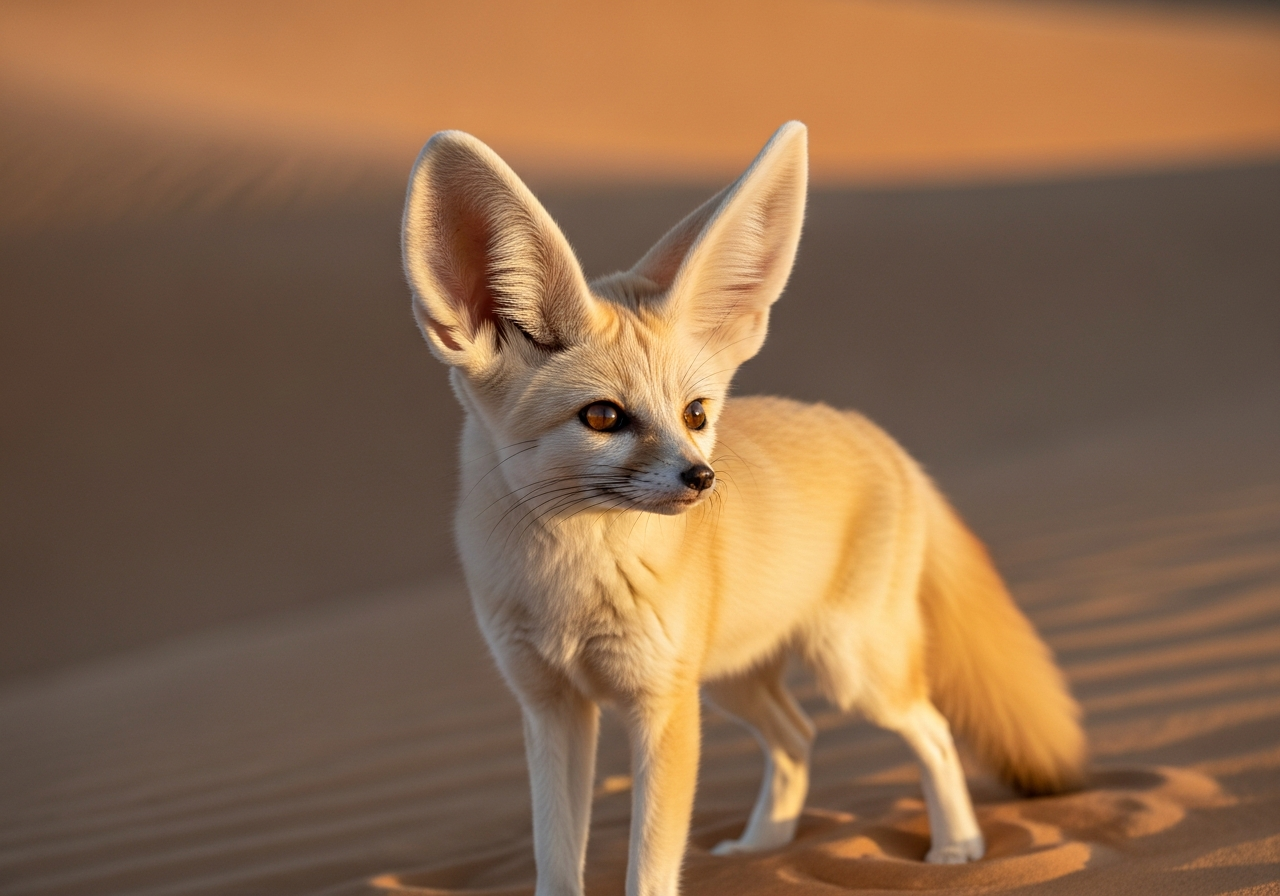
- Fennec Fox Same genus
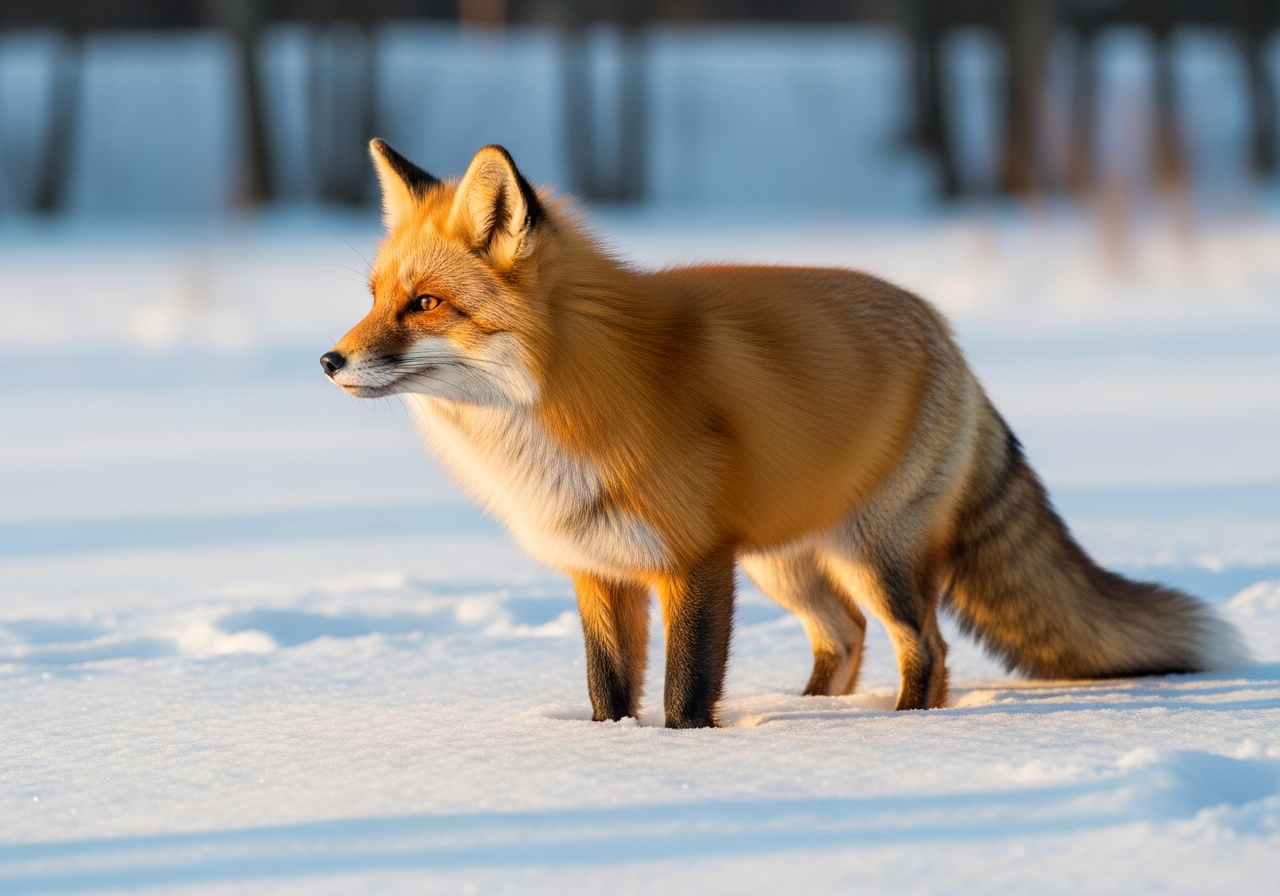
- Red Fox Same genus
- Dog Same family
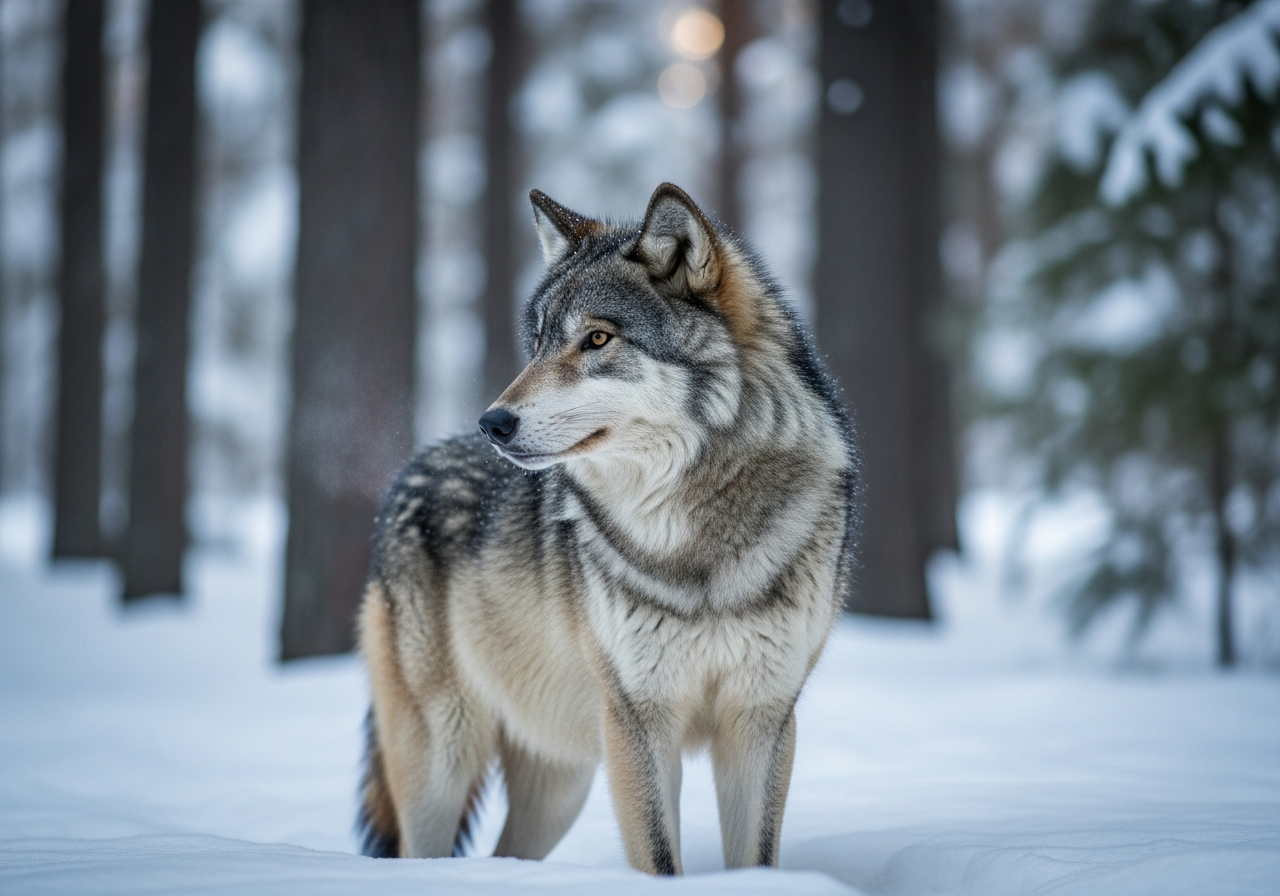
- Gray Wolf Same family
Conservation status of the Arctic Fox
The arctic fox (Vulpes lagopus) is listed as Least Concern on the IUCN Red List. Least Concern (LC) is the IUCN's lowest-risk category, assigned to widespread, abundant species that have been evaluated and found not to be threatened. It does not mean a species faces no pressures — only that it is not currently at risk of extinction.
The arctic fox (Vulpes lagopus) is assessed on the IUCN Red List. Look up on the IUCN Red List .
Frequently asked questions about the Arctic Fox
Why do Arctic foxes change colour?
For camouflage. A white winter coat hides them on snow and sea ice, while the brown-grey summer coat matches bare tundra. The change is moult triggered by day length, not by temperature.
How do Arctic foxes survive extreme cold?
They combine the warmest fur of any mammal with a compact, low-surface-area body, fur-covered paw pads, and counter-current heat exchange in the legs. Their metabolism barely increases until about −50 °C.
What do Arctic foxes eat?
Mainly lemmings and voles, plus ground-nesting birds, eggs, fish, and carrion. On the coast they scavenge seal carcasses left by polar bears and cache surplus food in the ground for lean times.
Are Arctic foxes endangered?
Not globally — the IUCN lists the species as Least Concern. However, the isolated population in mainland Norway, Sweden, and Finland is critically endangered and the subject of active recovery programmes.
How far can an Arctic fox travel?
Remarkably far. One satellite-tracked female travelled over 3,500 km from Norway to Canada in 76 days, one of the fastest long-distance journeys ever recorded for a land mammal of its size.
Sources & references
This guide is compiled and reviewed against established zoological and conservation references. Key sources for the Arctic Fox:
-
IUCN Red List of Threatened Species
Conservation status (Least Concern) reflects the IUCN Red List category for Vulpes lagopus.
-
iNaturalist — observations & photos
Search citizen-science observations and community IDs for Vulpes lagopus. Useful for range checks and recent sightings — not a substitute for formal Red List status.
-
GBIF — occurrence data
Global Biodiversity Information Facility species search for Vulpes lagopus. Explore published occurrence records used in range research.
-
Global Animal Guide editorial standards
How we research, source, review, and update every guide for accuracy.