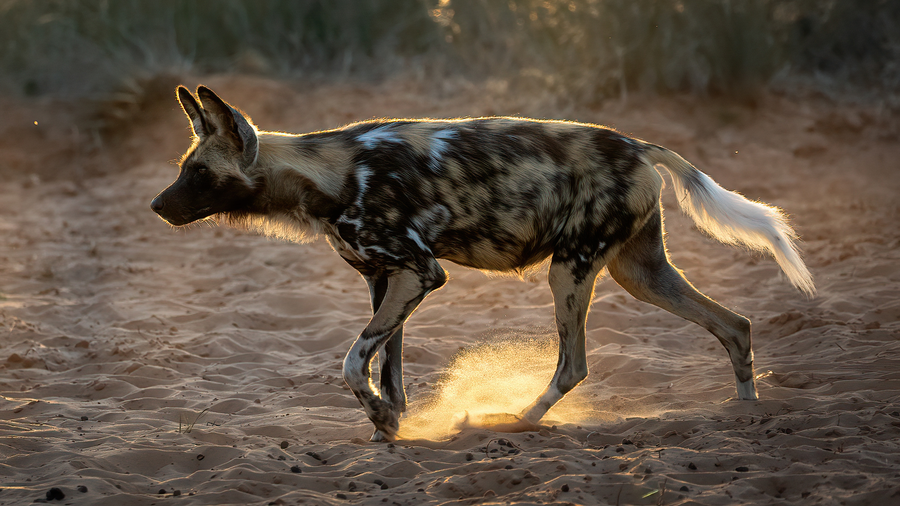
Quick answer
African wild dogs live in scattered sub-Saharan savanna, grassland and open woodland — a historic map with huge holes. They need enormous home ranges. IUCN: Endangered. Figures checked 13 August 2026.
Where do they live, really?
Open mosaics they can run. They are Lycaon pictus, not wolves. A Botswana density is not a West African remnant.
What cover do they actually use?
Dens in holes or thickets for pups; open ground for the chase. They are not a farms-and-suburbs species even when they cross ranchland.
How do people punch holes in the map?
Fences, snares, roads and disease from village dogs. One corridor lost can empty a pack’s range.
Does Endangered mean the map is gone?
Strongholds remain. Under about 7,000 animals as a planning ceiling is not a weekly census and not an all-clear.
Do packs replace space?
No. Cooperation is famous. Home ranges are still huge.
Does prey still decide the pins?
Yes. WARN’s habitat-loss reporting describes proposed partner work — not a painted-wolf camp.
Sources
African Wild Dog FAQs
Where do African wild dogs live?
Scattered savanna, grassland and open woodland across parts of sub-Saharan Africa — a historic map with huge holes. They need enormous home ranges. They are not wolves, not hyenas, and not a farms-and-suburbs species. IUCN: Endangered.
Do they still live across Africa?
No. Remaining packs sit in fragments. A Botswana or Kruger sighting is not West Africa. Mixing the pins mixes the threats.
Have they lost range?
Yes. Fences, snares and roads punch holes faster than packs can recolonise. Under about 7,000 animals remain as a widely cited planning ceiling. Endangered is not a tourist all-clear.
What actually protects their range?
Connected hunting ground and fewer snares. World Animal Rescue Network describes plans for habitat-protection partnerships. WARN does not run painted-wolf packs.
Who this page is for. This page is native range and habitat, not a sighting hotline.