Quick answer
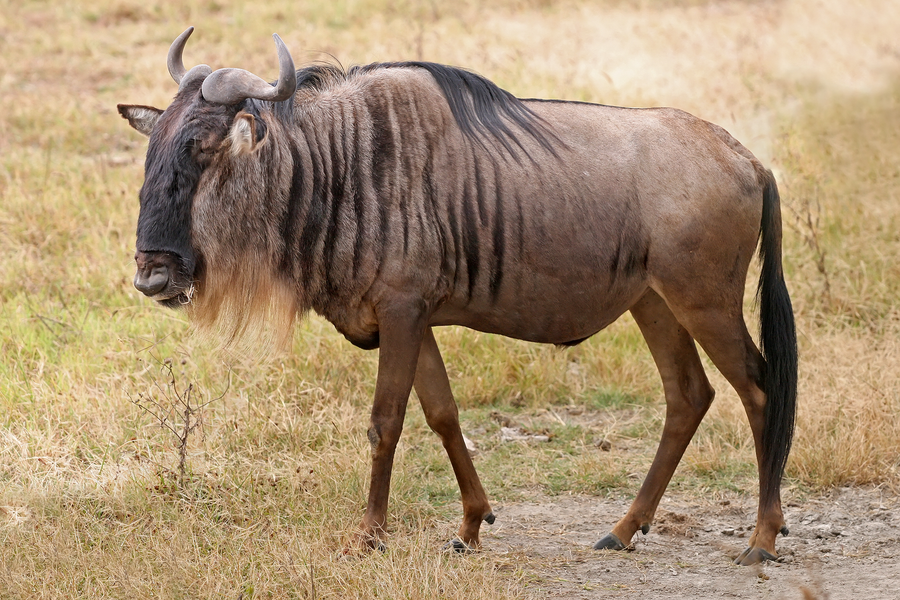
The blue wildebeest is a large African antelope famous for mass migrations across East Africa, following seasonal rains to fresh grass. Bulls weigh up to 290 kg (640 lb), both sexes carry curved horns, and herds can sprint 80 km/h when fleeing predators. Globally Least Concern but migration routes face growing pressure.
Key takeaway
The blue wildebeest is a large African antelope famous for mass migrations across East Africa, following seasonal rains to fresh grass. Bulls weigh up to 290 kg (640 lb), both sexes carry curved horns, and herds can sprint 80 km/h when fleeing predators. Globally Least Concern but migration routes face growing pressure.
Wildebeest overview
Wildebeest (Connochaetes taurinus) is a mammal listed here as Least Concern. Typical weight 120–290 kg (260–640 lb); bulls heavier than cows; lifespan around 15–20 years in the wild.
Wildebeest ecology
Diet: Herbivore — short grasses and fresh shoots. Habitat: Savannas and grasslands of East and southern Africa. Movement and social systems reflect those pressures across the native range.
Wildebeests and people
Learn before you travel or keep related pets. Wild wildebeests are not toys; captive care needs species-specific husbandry.
Status and further reading
Conservation label in our guides: Least Concern. See the full Wildebeest profile for taxonomy, FAQs, and related topic guides on this site.
Conservation and coexistence
Listed as Least Concern on the IUCN Red List. Habitat loss, hunting, and climate change threaten many populations. Responsible ecotourism and community conservation help in parts of their range. Never approach or feed wild wildebeests.
Human interest and research
Wildebeests feature in folklore, tourism, and scientific study worldwide. Ongoing research tracks population trends, genetics, and responses to environmental change — data that guides national protection policies.
Sources
Wildebeest FAQs
What are key facts about wildebeests?
The blue wildebeest is a large African antelope famous for mass migrations across East Africa, following seasonal rains to fresh grass. Bulls weigh up to 290 kg (640 lb), both sexes carry curved horns, and herds can sprint 80 km/h when fleeing predators. Globally Least Concern but migration routes face growing pressure.
What is the scientific name of the wildebeest?
Connochaetes taurinus — used in research and conservation listings for wildebeests.
What do wildebeests eat?
Wildebeests eat short grasses and fresh shoots, with seasonal and regional variation in Savannas and grasslands of East and southern Africa.
Where do wildebeests live?
They are associated with Savannas and grasslands of East and southern Africa. Local presence depends on food, cover, and human land use.
What is the conservation status of wildebeests?
Listed in our guides as Least Concern. Check the IUCN Red List and national assessments for the latest formal category.