Quick answer
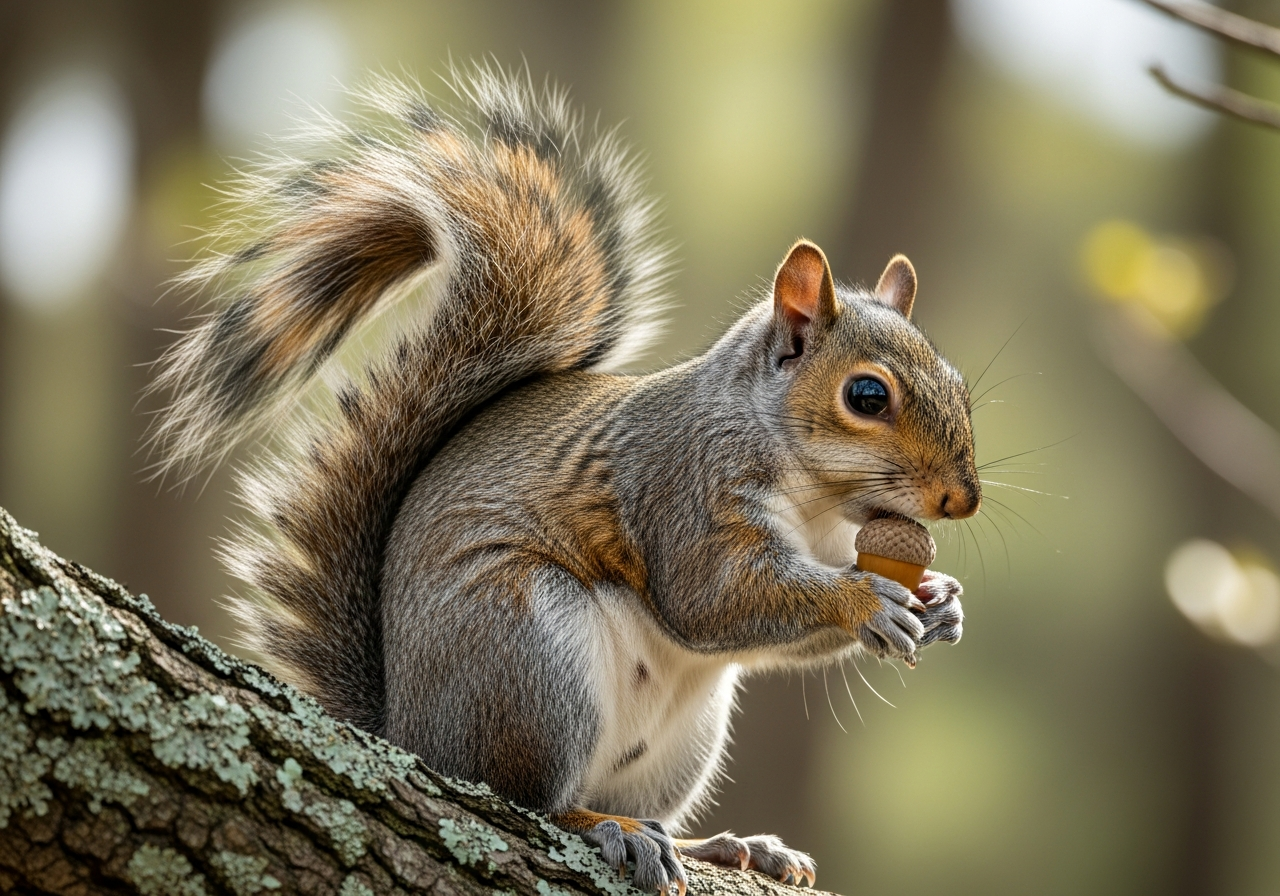
Squirrels are agile tree-climbing rodents best known from the eastern gray squirrel, a familiar resident of woodlands, parks, and gardens across North America and much of Europe. They are mostly herbivorous, feeding on nuts, seeds, and fruit, and famously bury food caches to survive winter. Adults typically measure 23 to 30 cm (9 to 12 in) in body length plus a long bushy tail, and wild gray squirrels usually live around 6 years. Squirrels as a family live nearly worldwide.
Key takeaway
Squirrels are agile tree-climbing rodents best known from the eastern gray squirrel, a familiar resident of woodlands, parks, and gardens across North America and much of Europe. They are mostly herbivorous, feeding on nuts, seeds, and fruit, and famously bury food caches to survive winter. Adults typically measure 23 to 30 cm (9 to 12 in) in body length plus a long bushy tail, and wild gray squirrels usually live around 6 years. Squirrels as a family live nearly worldwide.
Squirrel overview
Squirrel (Sciurus carolinensis) is a mammal listed here as Least Concern. Typical weight 400–700 g (0.9–1.5 lb); lifespan around About 6 years in the wild.
Squirrel ecology
Diet: Omnivore (mostly nuts, seeds, fruit). Habitat: Woodlands, parks, and gardens. Movement and social systems reflect those pressures across the native range.
Squirrels and people
Learn before you travel or keep related pets. Wild squirrels are not toys; captive care needs species-specific husbandry.
Status and further reading
Conservation label in our guides: Least Concern. See the full Squirrel profile for taxonomy, FAQs, and related topic guides on this site.
Behavior and agility
Squirrels are remarkably acrobatic, leaping between branches and running headfirst down tree trunks thanks to ankle joints that rotate to grip bark. Their long, bushy tails aid balance, act as a rudder during jumps, and serve as a blanket in cold weather. They are active by day and stay alert for predators, flicking their tails and giving sharp calls when alarmed. Gray squirrels build leafy nests called dreys high in
Diet and food caching
Squirrels are mostly herbivorous, eating nuts, seeds, acorns, fruit, buds, and fungi, and occasionally insects or eggs. They are famous for caching food, burying thousands of nuts each autumn to eat through winter. Many of these buried seeds are never recovered and grow into new trees, making squirrels important seed dispersers. They use spatial memory and smell to relocate their hidden stores.
Sources
Squirrel FAQs
What are key facts about squirrels?
Squirrels are agile tree-climbing rodents best known from the eastern gray squirrel, a familiar resident of woodlands, parks, and gardens across North America and much of Europe. They are mostly herbivorous, feeding on nuts, seeds, and fruit, and famously bury food caches to survive winter. Adults typically measure 23 to 30 cm (9 to 12 in) in body length plus a long bushy tail, and wild gray squirrels usually live around 6 years. Squirrels as a family live nearly worldwide.
What is the scientific name of the squirrel?
Sciurus carolinensis — used in research and conservation listings for squirrels.
What do squirrels eat?
Squirrels eat mostly nuts, seeds and fruit, with seasonal and regional variation in Woodlands, parks, and gardens.
Where do squirrels live?
They are associated with Woodlands, parks, and gardens. Local presence depends on food, cover, and human land use.
What is the conservation status of squirrels?
Listed in our guides as Least Concern. Check the IUCN Red List and national assessments for the latest formal category.