Quick answer
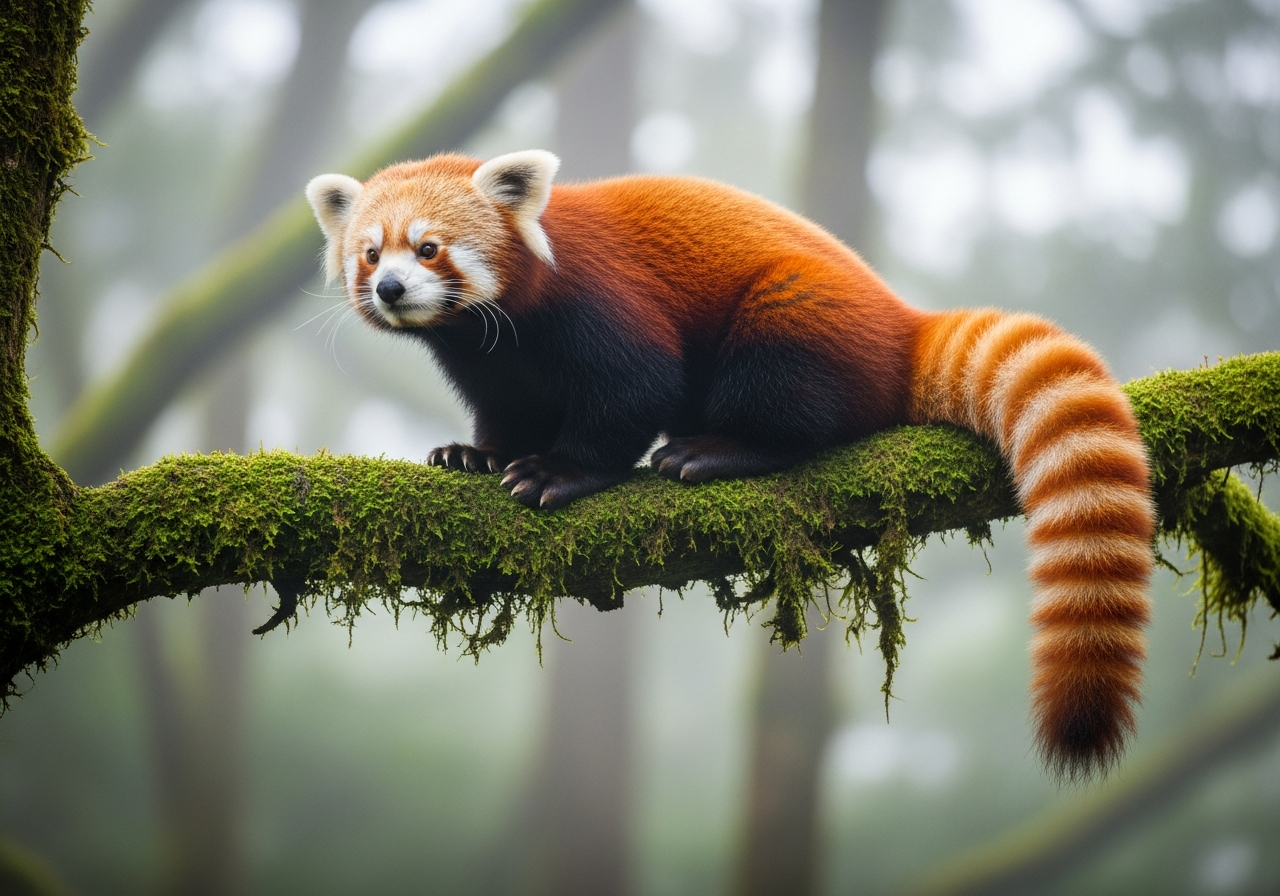
The red panda is a small, tree-dwelling mammal native to the eastern Himalayas and southwestern China, with rust-red fur, a ringed bushy tail, and a face like a raccoon. About the size of a house cat, it feeds mainly on bamboo and is the only living member of its own family. Red pandas typically live 8 to 14 years and are listed as Endangered.
Key takeaway
The red panda is a small, tree-dwelling mammal native to the eastern Himalayas and southwestern China, with rust-red fur, a ringed bushy tail, and a face like a raccoon. About the size of a house cat, it feeds mainly on bamboo and is the only living member of its own family. Red pandas typically live 8 to 14 years and are listed as Endangered.
Red Panda overview
Red Panda (Ailurus fulgens) is a mammal listed here as Endangered. Typical weight 3–6 kg (7–13 lb); lifespan around 8–14 years.
Red Panda ecology
Diet: Omnivore (mostly bamboo). Habitat: Temperate Himalayan forest. Movement and social systems reflect those pressures across the native range.
Red Pandas and people
Learn before you travel or keep related pets. Wild red pandas are not toys; captive care needs species-specific husbandry.
Status and further reading
Conservation label in our guides: Endangered. See the full Red Panda profile for taxonomy, FAQs, and related topic guides on this site.
Surviving the cold
Living in cool mountain forests, the red panda has dense fur even on the soles of its feet and wraps its long, bushy tail around itself like a blanket against the cold. When threatened, it can stand on its hind legs to look bigger and lash out with sharp claws.
Conservation
Red pandas are Endangered, with fewer than an estimated 10,000 left in the wild. Deforestation, fragmentation of their bamboo forests, poaching for fur, and the illegal pet trade are the main threats. Protected reserves and community forestry programs are vital to their future.
Sources
Red Panda FAQs
What are key facts about red pandas?
The red panda is a small, tree-dwelling mammal native to the eastern Himalayas and southwestern China, with rust-red fur, a ringed bushy tail, and a face like a raccoon. About the size of a house cat, it feeds mainly on bamboo and is the only living member of its own family. Red pandas typically live 8 to 14 years and are listed as Endangered.
What is the scientific name of the red panda?
Ailurus fulgens — used in research and conservation listings for red pandas.
What do red pandas eat?
Red Pandas eat mostly bamboo, with seasonal and regional variation in Temperate Himalayan forest.
Where do red pandas live?
They are associated with Temperate Himalayan forest. Local presence depends on food, cover, and human land use.
What is the conservation status of red pandas?
Listed in our guides as Endangered. Check the IUCN Red List and national assessments for the latest formal category.