Quick answer
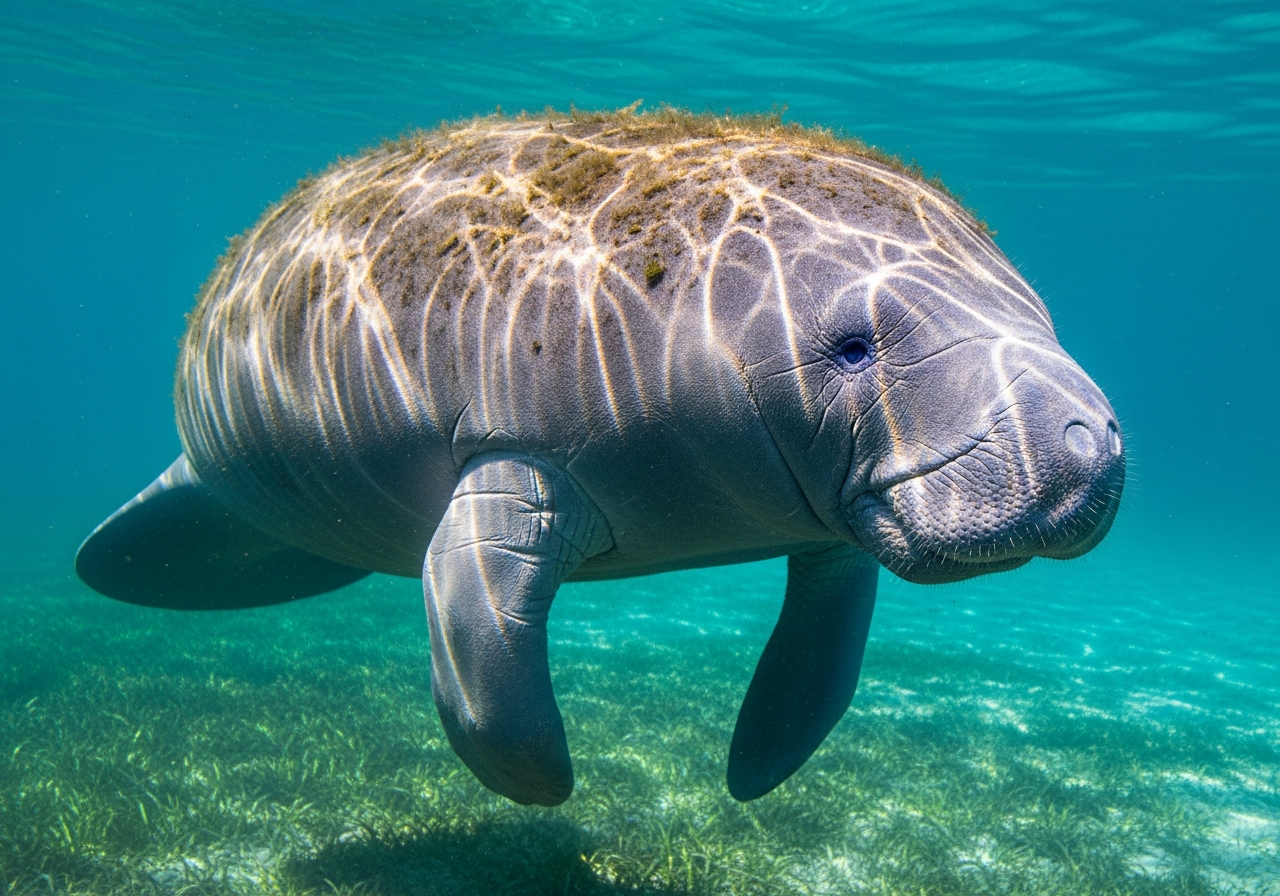
Manatees are large, slow-moving aquatic mammals often called sea cows. The West Indian manatee grazes on seagrass and water plants in warm rivers, estuaries, and shallow coasts. Adults reach about 3 m (10 ft) and 500 kg (1,100 lb) and can live 40 years or more in the wild.
Key takeaway
Manatees are large, slow-moving aquatic mammals often called sea cows. The West Indian manatee grazes on seagrass and water plants in warm rivers, estuaries, and shallow coasts. Adults reach about 3 m (10 ft) and 500 kg (1,100 lb) and can live 40 years or more in the wild.
Manatee overview
Manatee (Trichechus manatus) is a mammal listed here as Vulnerable. Typical weight 200–600 kg (440–1,300 lb); lifespan around 40+ years in the wild.
Manatee ecology
Diet: Herbivore (seagrass and water plants). Habitat: Warm rivers, estuaries, and shallow coasts. Movement and social systems reflect those pressures across the native range.
Manatees and people
Learn before you travel or keep related pets. Wild manatees are not toys; captive care needs species-specific husbandry.
Status and further reading
Conservation label in our guides: Vulnerable. See the full Manatee profile for taxonomy, FAQs, and related topic guides on this site.
Habitat and range
The West Indian manatee lives along the Atlantic coast from the southeastern United States through the Caribbean to northern Brazil. It moves freely between salt, brackish, and fresh water, following warm temperatures and the seagrass beds it depends on for food.
Conservation
Manatees are listed as Vulnerable by the IUCN. Their greatest threats are collisions with boats — many wild manatees carry scars from propellers — along with loss of seagrass, cold-water stress, and entanglement. Speed-limit zones, habitat protection, and rescue-and-release programs are central to their recovery.
Sources
Manatee FAQs
What are key facts about manatees?
Manatees are large, slow-moving aquatic mammals often called sea cows. The West Indian manatee grazes on seagrass and water plants in warm rivers, estuaries, and shallow coasts. Adults reach about 3 m (10 ft) and 500 kg (1,100 lb) and can live 40 years or more in the wild.
What is the scientific name of the manatee?
Trichechus manatus — used in research and conservation listings for manatees.
What do manatees eat?
Manatees eat seagrass and water plants, with seasonal and regional variation in Warm rivers, estuaries, and shallow coasts.
Where do manatees live?
They are associated with Warm rivers, estuaries, and shallow coasts. Local presence depends on food, cover, and human land use.
What is the conservation status of manatees?
Listed in our guides as Vulnerable. Check the IUCN Red List and national assessments for the latest formal category.