Quick answer
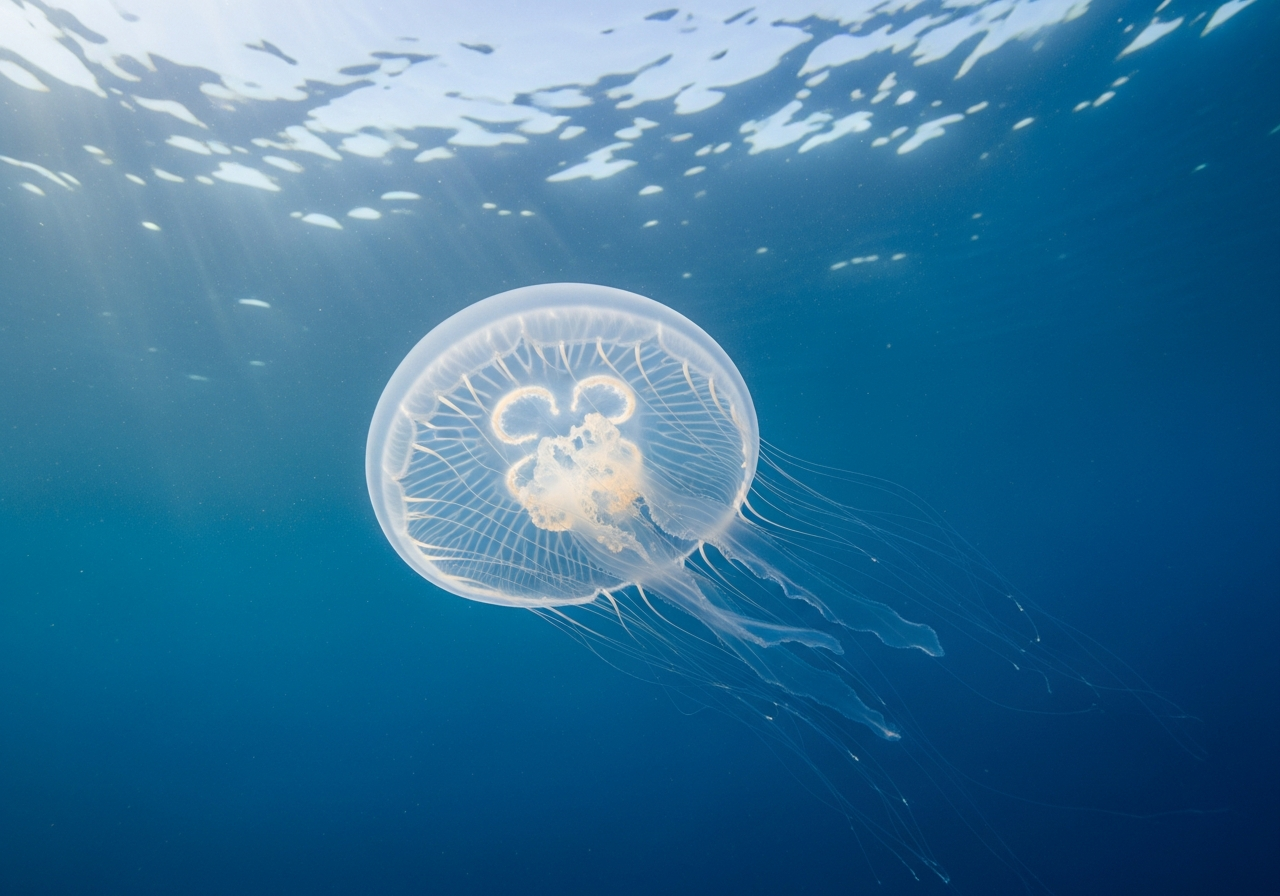
Jellyfish are gelatinous marine animals that have drifted through the oceans for over 500 million years, longer than the dinosaurs. They have no brain, heart, or bones, are about 95% water, and capture prey using stinging tentacles. Sizes range from a few millimeters to the lion's mane jellyfish with tentacles over 30 m (100 ft) long, and the box jellyfish is among the most venomous animals on Earth.
Key takeaway
Jellyfish are gelatinous marine animals that have drifted through the oceans for over 500 million years, longer than the dinosaurs. They have no brain, heart, or bones, are about 95% water, and capture prey using stinging tentacles. Sizes range from a few millimeters to the lion's mane jellyfish with tentacles over 30 m (100 ft) long, and the box jellyfish is among the most venomous animals on Earth.
Jellyfish overview
Jellyfish (Medusozoa) is a invertebrate listed here as Least Concern. Typical weight about 2 kg; lifespan around A few months to a few years.
Jellyfish ecology
Diet: Carnivore (plankton and small fish). Habitat: Oceans worldwide, surface to deep sea. Movement and social systems reflect those pressures across the native range.
Jellyfishs and people
Learn before you travel or keep related pets. Wild jellyfishs are not toys; captive care needs species-specific husbandry.
Status and further reading
Conservation label in our guides: Least Concern. See the full Jellyfish profile for taxonomy, FAQs, and related topic guides on this site.
Life without a brain
Jellyfish have no brain, heart, blood, or bones. They sense the world through a simple net of nerves and react to light, touch, and chemicals in the water. Made of around 95% water, their bell pulses gently to move, though they mostly drift with the currents.
Stinging tentacles
A jellyfish's trailing tentacles are armed with thousands of microscopic stinging capsules called nematocysts that fire venom-tipped threads on contact, paralyzing plankton and small fish. Some species are harmless to people, while the box jellyfish carries venom potent enough to be life-threatening.
Sources
Jellyfish FAQs
What are key facts about jellyfishs?
Jellyfish are gelatinous marine animals that have drifted through the oceans for over 500 million years, longer than the dinosaurs. They have no brain, heart, or bones, are about 95% water, and capture prey using stinging tentacles. Sizes range from a few millimeters to the lion's mane jellyfish with tentacles over 30 m (100 ft) long, and the box jellyfish is among the most venomous animals on Earth.
What is the scientific name of the jellyfish?
Medusozoa — used in research and conservation listings for jellyfishs.
What do jellyfishs eat?
Jellyfishs eat plankton and small fish, with seasonal and regional variation in Oceans worldwide, surface to deep sea.
Where do jellyfishs live?
They are associated with Oceans worldwide, surface to deep sea. Local presence depends on food, cover, and human land use.
What is the conservation status of jellyfishs?
Listed in our guides as Least Concern. Check the IUCN Red List and national assessments for the latest formal category.