Quick answer
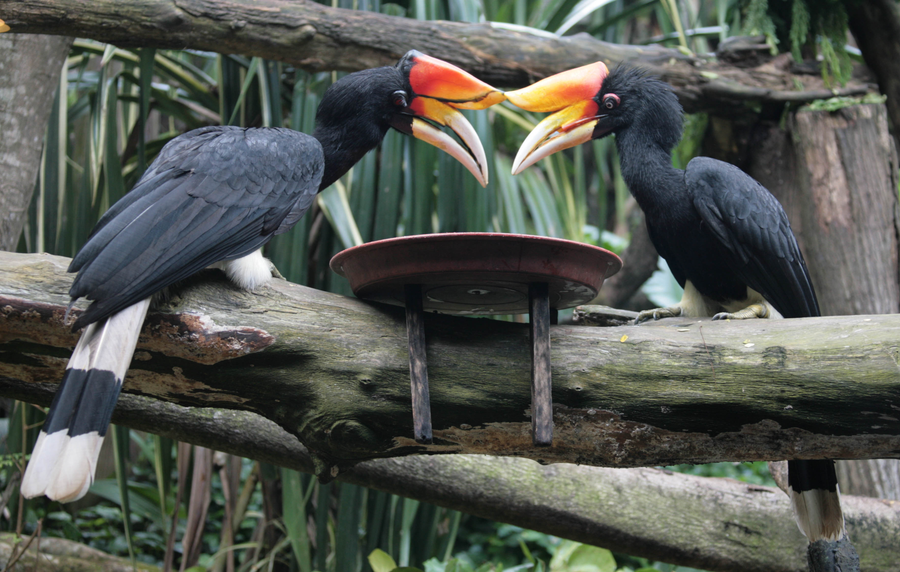
The rhinoceros hornbill is a huge black-and-white bird with a dramatic orange-red casque atop an enormous bill, found in rainforests of Southeast Asia. Females seal themselves inside tree-cavity nests while males deliver food, and the species is listed Vulnerable from logging and hunting.
Key takeaway
The rhinoceros hornbill is a huge black-and-white bird with a dramatic orange-red casque atop an enormous bill, found in rainforests of Southeast Asia. Females seal themselves inside tree-cavity nests while males deliver food, and the species is listed Vulnerable from logging and hunting.
Rhinoceros Hornbill overview
Rhinoceros Hornbill (Buceros rhinoceros) is a bird listed here as Vulnerable. Typical weight 2–3 kg (4.4–6.6 lb); lifespan around 30–35 years in the wild.
Rhinoceros Hornbill ecology
Diet: Omnivore — fruit, small animals, and insects. Habitat: Lowland and hill rainforests of Southeast Asia. Movement and social systems reflect those pressures across the native range.
Rhinoceros Hornbills and people
Learn before you travel or keep related pets. Wild rhinoceros hornbills are not toys; captive care needs species-specific husbandry.
Status and further reading
Conservation label in our guides: Vulnerable. See the full Rhinoceros Hornbill profile for taxonomy, FAQs, and related topic guides on this site.
Casque and bill
The hollow casque is thought to amplify calls that carry through dense forest — males announce territory with resonant honking. The massive bill is used to pluck fruit and capture lizards and nestling birds, yet the hornbill's centre of gravity is adjusted by hollow bone structure.
Nest sealing ritual
Females enter a tree hollow and seal the entrance with mud, droppings, and fruit pulp, leaving only a slit for the male to pass food. She moulted flight feathers during incubation and depends entirely on the male for weeks — one of bird world's most extreme breeding commitments.
Sources
Rhinoceros Hornbill FAQs
What are key facts about rhinoceros hornbills?
The rhinoceros hornbill is a huge black-and-white bird with a dramatic orange-red casque atop an enormous bill, found in rainforests of Southeast Asia. Females seal themselves inside tree-cavity nests while males deliver food, and the species is listed Vulnerable from logging and hunting.
What is the scientific name of the rhinoceros hornbill?
Buceros rhinoceros — used in research and conservation listings for rhinoceros hornbills.
What do rhinoceros hornbills eat?
Rhinoceros Hornbills eat fruit, small animals, and insects, with seasonal and regional variation in Lowland and hill rainforests of Southeast Asia.
Where do rhinoceros hornbills live?
They are associated with Lowland and hill rainforests of Southeast Asia. Local presence depends on food, cover, and human land use.
What is the conservation status of rhinoceros hornbills?
Listed in our guides as Vulnerable. Check the IUCN Red List and national assessments for the latest formal category.