Quick answer
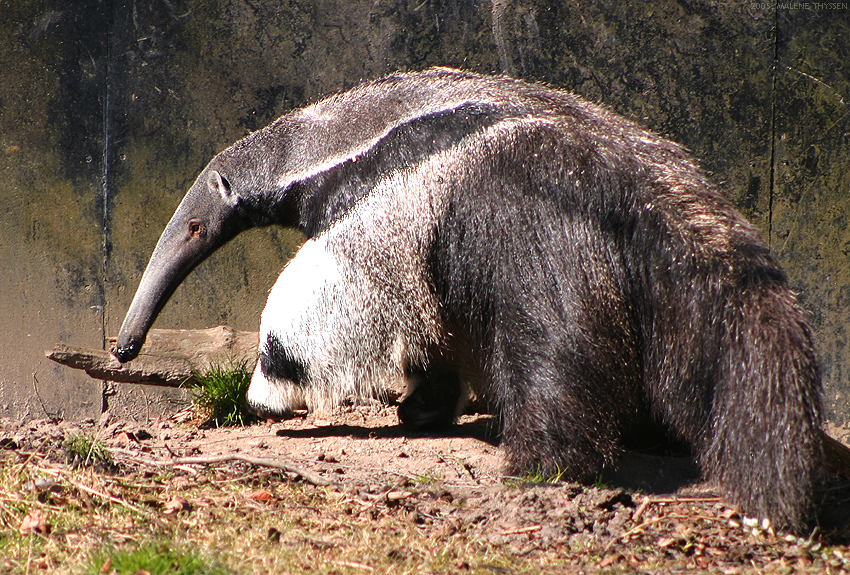
The giant anteater is a unmistakable mammal with a long snout, bushy tail, and front claws used to tear open termite mounds. Its tongue extends up to 60 cm and flicks 150 times per minute into insect nests. Listed Vulnerable, it walks on knuckles to protect claws and carries single offspring on its back.
Key takeaway
The giant anteater is a unmistakable mammal with a long snout, bushy tail, and front claws used to tear open termite mounds. Its tongue extends up to 60 cm and flicks 150 times per minute into insect nests. Listed Vulnerable, it walks on knuckles to protect claws and carries single offspring on its back.
Giant Anteater overview
Giant Anteater (Myrmecophaga tridactyla) is a mammal listed here as Vulnerable. Typical weight 33–50 kg (73–110 lb); lifespan around 14–16 years in the wild.
Giant Anteater ecology
Diet: Insectivore — ants and termites. Habitat: Grasslands, savannas, and forests of Central and South America. Movement and social systems reflect those pressures across the native range.
Giant Anteaters and people
Learn before you travel or keep related pets. Wild giant anteaters are not toys; captive care needs species-specific husbandry.
Status and further reading
Conservation label in our guides: Vulnerable. See the full Giant Anteater profile for taxonomy, FAQs, and related topic guides on this site.
Tongue mechanics
The sticky tongue is attached to the sternum and can extend 60 cm — longer than the skull — with no teeth in the tubular mouth. A giant anteater consumes up to 30,000 insects daily but spends only seconds at each nest to avoid soldier ant stings.
Knuckle walking and claws
Front claws up to 10 cm long tear concrete-hard termite mounds but would wear on pavement-like ground, so anteaters walk on their knuckles. When threatened, they rear up on hind legs and slash — capable of deterring jaguars and killing humans in rare encounters.
Sources
Giant Anteater FAQs
What are key facts about giant anteaters?
The giant anteater is a unmistakable mammal with a long snout, bushy tail, and front claws used to tear open termite mounds. Its tongue extends up to 60 cm and flicks 150 times per minute into insect nests. Listed Vulnerable, it walks on knuckles to protect claws and carries single offspring on its back.
What is the scientific name of the giant anteater?
Myrmecophaga tridactyla — used in research and conservation listings for giant anteaters.
What do giant anteaters eat?
Giant Anteaters eat ants and termites, with seasonal and regional variation in Grasslands, savannas, and forests of Central and South America.
Where do giant anteaters live?
They are associated with Grasslands, savannas, and forests of Central and South America. Local presence depends on food, cover, and human land use.
What is the conservation status of giant anteaters?
Listed in our guides as Vulnerable. Check the IUCN Red List and national assessments for the latest formal category.