Quick answer
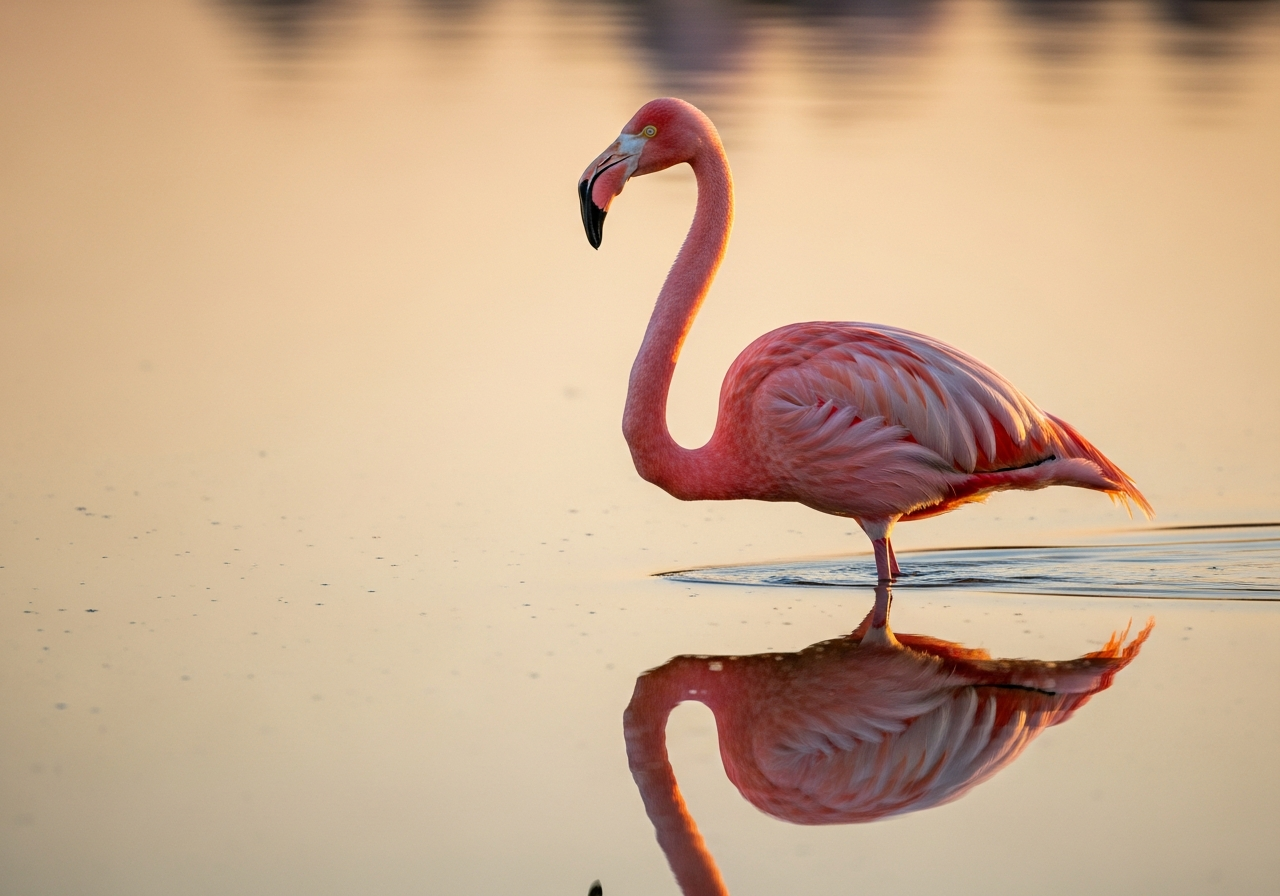
The flamingo is a tall wading bird famous for its vivid pink plumage, long legs, and habit of standing on one leg. Its color comes from pigments in the algae and brine shrimp it eats, filtered from the water with a specially shaped, upside-down bill. Flamingos live in large flocks in shallow lakes and lagoons, and some can reach 40 years or more.
Key takeaway
The flamingo is a tall wading bird famous for its vivid pink plumage, long legs, and habit of standing on one leg. Its color comes from pigments in the algae and brine shrimp it eats, filtered from the water with a specially shaped, upside-down bill. Flamingos live in large flocks in shallow lakes and lagoons, and some can reach 40 years or more.
Flamingo overview
Flamingo (Phoenicopterus roseus) is a bird listed here as Least Concern. Typical weight about 3.5 kg; lifespan around 20–40+ years.
Flamingo ecology
Diet: Filter feeder (algae and brine shrimp). Habitat: Shallow lakes, lagoons, and estuaries. Movement and social systems reflect those pressures across the native range.
Flamingos and people
Learn before you travel or keep related pets. Wild flamingos are not toys; captive care needs species-specific husbandry.
Status and further reading
Conservation label in our guides: Least Concern. See the full Flamingo profile for taxonomy, FAQs, and related topic guides on this site.
Why flamingos are pink
Flamingos are not born pink; chicks hatch grey. Their famous color comes from pigments called carotenoids in the algae and tiny crustaceans they eat, which their bodies process and deposit in the feathers. A flamingo's exact shade reflects its diet, and the pinkest birds are often the best fed and most attractive mates.
Upside-down feeding
A flamingo feeds with its head upside down in the water, sweeping its uniquely shaped bill from side to side. Comb-like plates called lamellae filter algae, brine shrimp, and tiny organisms from the mud and water, much like a baleen whale, while pumping out the excess water.
Sources
Flamingo FAQs
What are key facts about flamingos?
The flamingo is a tall wading bird famous for its vivid pink plumage, long legs, and habit of standing on one leg. Its color comes from pigments in the algae and brine shrimp it eats, filtered from the water with a specially shaped, upside-down bill. Flamingos live in large flocks in shallow lakes and lagoons, and some can reach 40 years or more.
What is the scientific name of the flamingo?
Phoenicopterus roseus — used in research and conservation listings for flamingos.
What do flamingos eat?
Flamingos eat algae and brine shrimp, with seasonal and regional variation in Shallow lakes, lagoons, and estuaries.
Where do flamingos live?
They are associated with Shallow lakes, lagoons, and estuaries. Local presence depends on food, cover, and human land use.
What is the conservation status of flamingos?
Listed in our guides as Least Concern. Check the IUCN Red List and national assessments for the latest formal category.