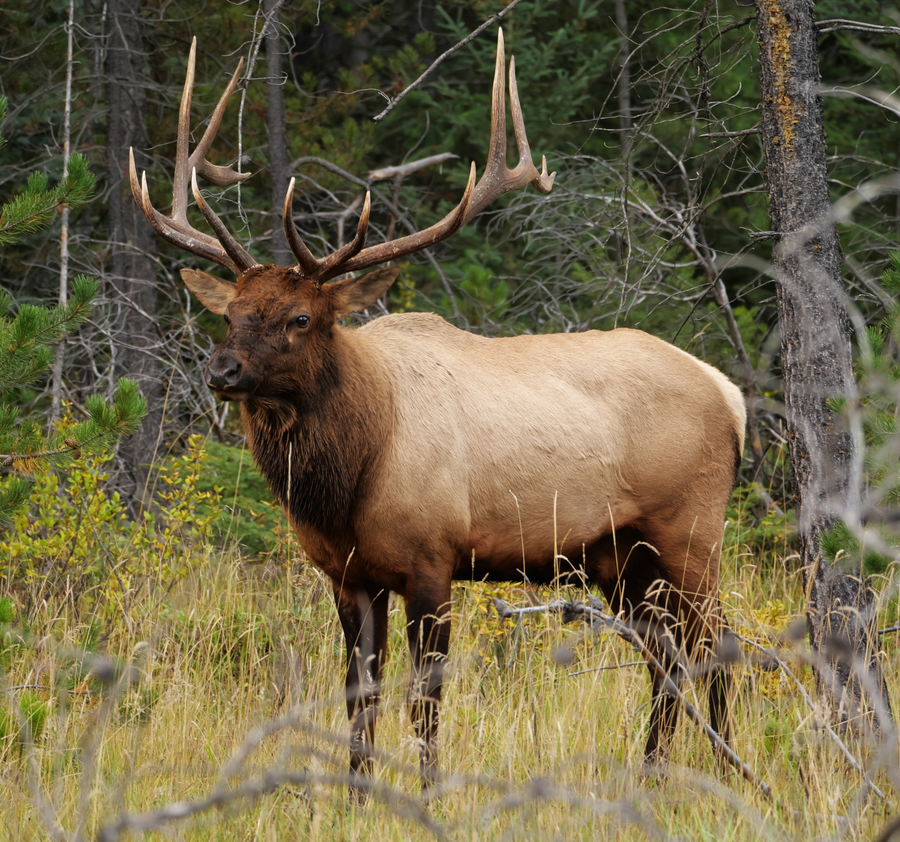
Quick answer
The elk, or wapiti, is one of the largest deer species in the world, with bulls weighing up to 450 kg (990 lb) and carrying impressive antlers shed each year. Elk herds graze open meadows and forest edges across western North America, and males produce a famous autumn bugle during the rut.
Key takeaway
The elk, or wapiti, is one of the largest deer species in the world, with bulls weighing up to 450 kg (990 lb) and carrying impressive antlers shed each year. Elk herds graze open meadows and forest edges across western North America, and males produce a famous autumn bugle during the rut.
Elk overview
Elk (Cervus canadensis) is an mammal listed here as Least Concern. Typical weight Bulls up to 450 kg (990 lb); cows about 230–270 kg; lifespan around 10–15 years in the wild (up to 20 in protected areas).
Elk ecology
Diet: Herbivore — grasses, forbs, bark, and browse. Habitat: Grasslands, open forests, and mountain meadows. Movement and social systems reflect those pressures across the native range.
Elks and people
Learn before you travel or keep related pets. Wild elks are not toys; captive care needs species-specific husbandry.
Status and further reading
Conservation label in our guides: Least Concern. See the full Elk profile for taxonomy, FAQs, and related topic guides on this site.
The rut and bugling
Each autumn bull elk gather harems and bugle — a piercing call that carries across valleys to attract cows and warn rivals. Bulls clash antlers in shoving matches that can leave scars or broken tines. After the rut, bulls lose weight and shed their antlers in winter.
Migration and herd life
Many elk populations migrate seasonally between high summer range and lower winter range, sometimes crossing busy roads and development corridors. Cows, calves, and yearlings form herds for much of the year, while mature bulls are often solitary outside the breeding season.
Sources
Elk FAQs
What are key facts about elks?
The elk, or wapiti, is one of the largest deer species in the world, with bulls weighing up to 450 kg (990 lb) and carrying impressive antlers shed each year. Elk herds graze open meadows and forest edges across western North America, and males produce a famous autumn bugle during the rut.
What is the scientific name of the elk?
Cervus canadensis — used in research and conservation listings for elks.
What do elks eat?
Elks eat grasses, forbs, bark, and browse, with seasonal and regional variation in Grasslands, open forests, and mountain meadows.
Where do elks live?
They are associated with Grasslands, open forests, and mountain meadows. Local presence depends on food, cover, and human land use.
What is the conservation status of elks?
Listed in our guides as Least Concern. Check the IUCN Red List and national assessments for the latest formal category.