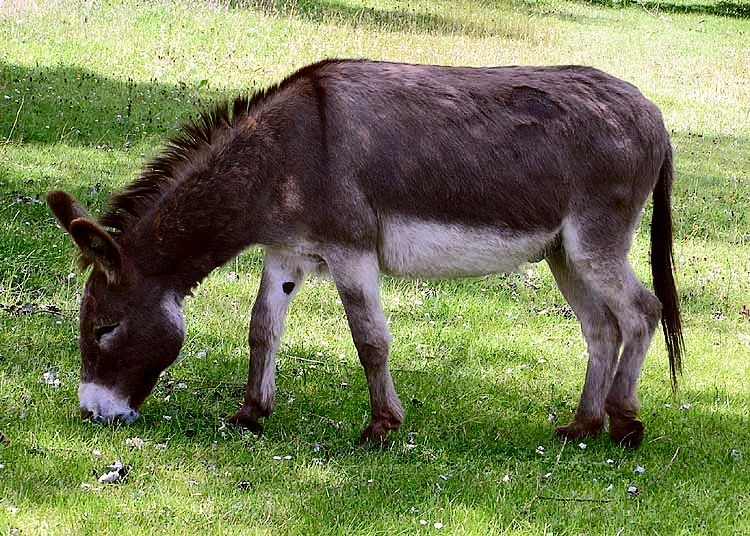
Quick answer
Donkeys were domesticated in northeastern Africa around 5,000 years ago and spread worldwide as pack animals, draft animals, and companions. They are intelligent, cautious, and form strong social bonds, with working donkeys still carrying water, goods, and livelihoods across low-income countries today.
Key takeaway
Donkeys were domesticated in northeastern Africa around 5,000 years ago and spread worldwide as pack animals, draft animals, and companions. They are intelligent, cautious, and form strong social bonds, with working donkeys still carrying water, goods, and livelihoods across low-income countries today.
Donkey overview
Donkey (Equus asinus) is a mammal listed here as Domesticated. Typical weight 80–480 kg (180–1,060 lb) depending on breed; lifespan around 25–30 years (sometimes over 40 with excellent care).
Donkey ecology
Diet: Herbivore — grass, hay, straw, and browse. Habitat: Worldwide on farms, rangelands, and arid regions. Movement and social systems reflect those pressures across the native range.
Donkeys and people
Learn before you travel or keep related pets. Wild donkeys are not toys; captive care needs species-specific husbandry.
Status and further reading
Conservation label in our guides: Domesticated. See the full Donkey profile for taxonomy, FAQs, and related topic guides on this site.
Domestication and history
The African wild ass is the ancestor of the domestic donkey. Ancient Egyptians and Mesopotamians valued donkeys for transport across terrain too arid for horses. Today an estimated 50 million donkeys exist worldwide, most of them working animals in low- and middle-income countries.
Behaviour and intelligence
Donkeys freeze and assess danger rather than fleeing like horses — often misread as stubbornness. They have excellent memories, strong social bonds, and communicate with brays, ear position, and body language. Miniature and standard breeds serve as pets and therapy animals in many countries.
Sources
Donkey FAQs
What are key facts about donkeys?
Donkeys were domesticated in northeastern Africa around 5,000 years ago and spread worldwide as pack animals, draft animals, and companions. They are intelligent, cautious, and form strong social bonds, with working donkeys still carrying water, goods, and livelihoods across low-income countries today.
What is the scientific name of the donkey?
Equus asinus — used in research and conservation listings for donkeys.
What do donkeys eat?
Donkeys eat grass, hay, straw, and browse, with seasonal and regional variation in Worldwide on farms, rangelands, and arid regions.
Where do donkeys live?
They are associated with Worldwide on farms, rangelands, and arid regions. Local presence depends on food, cover, and human land use.
What is the conservation status of donkeys?
Listed in our guides as Domesticated. Check the IUCN Red List and national assessments for the latest formal category.