Bald Eagle vs Red-tailed Hawk
Quick answer
In a hypothetical one-on-one, the Bald Eagle would most likely come out on top in most encounters, thanks to its more dangerous natural weapons. In reality, animals like these rarely meet, and both would usually avoid a fight.
This is a hypothetical, educational comparison based on typical size, strength, and natural weaponry. In the wild these animals rarely meet, and most encounters end without a fight.
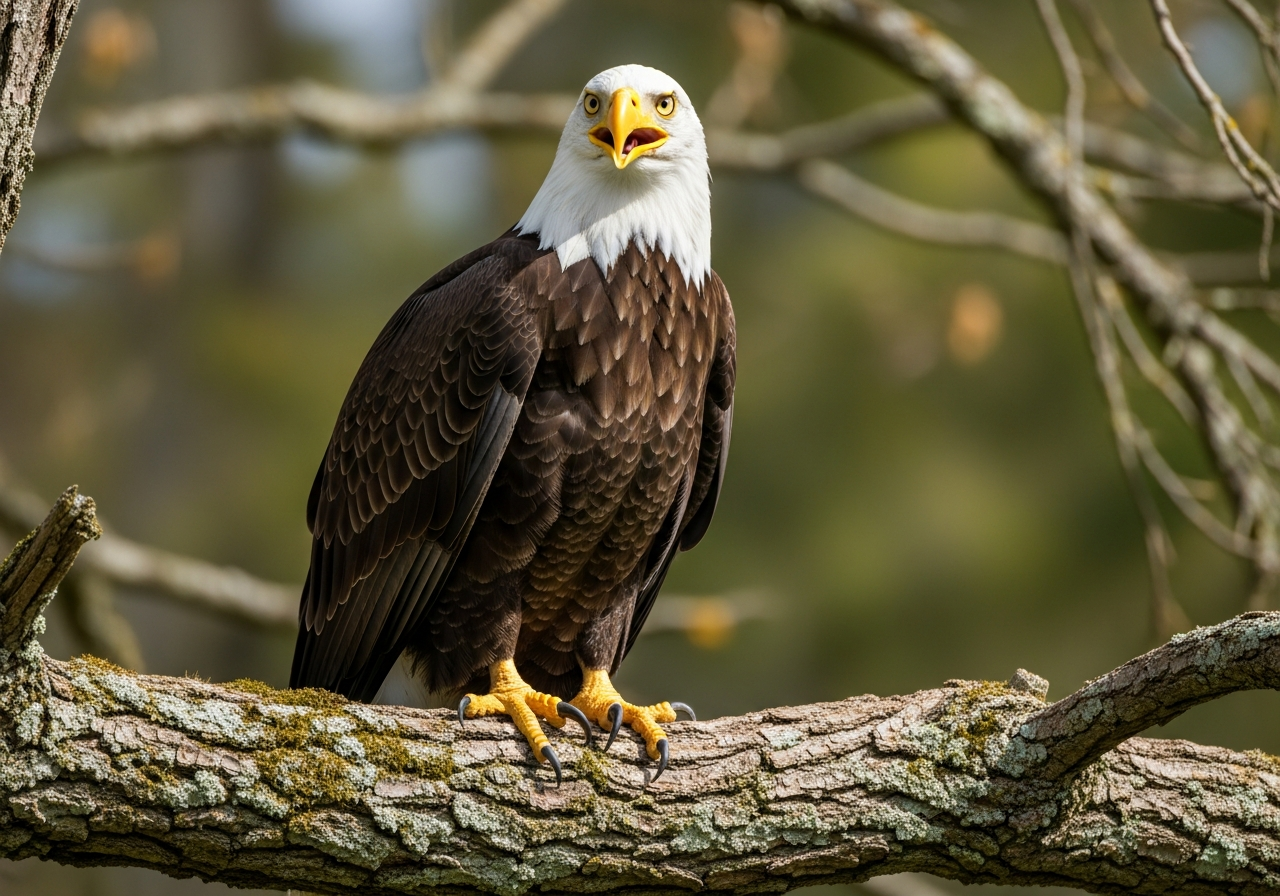
Bird
Least Concern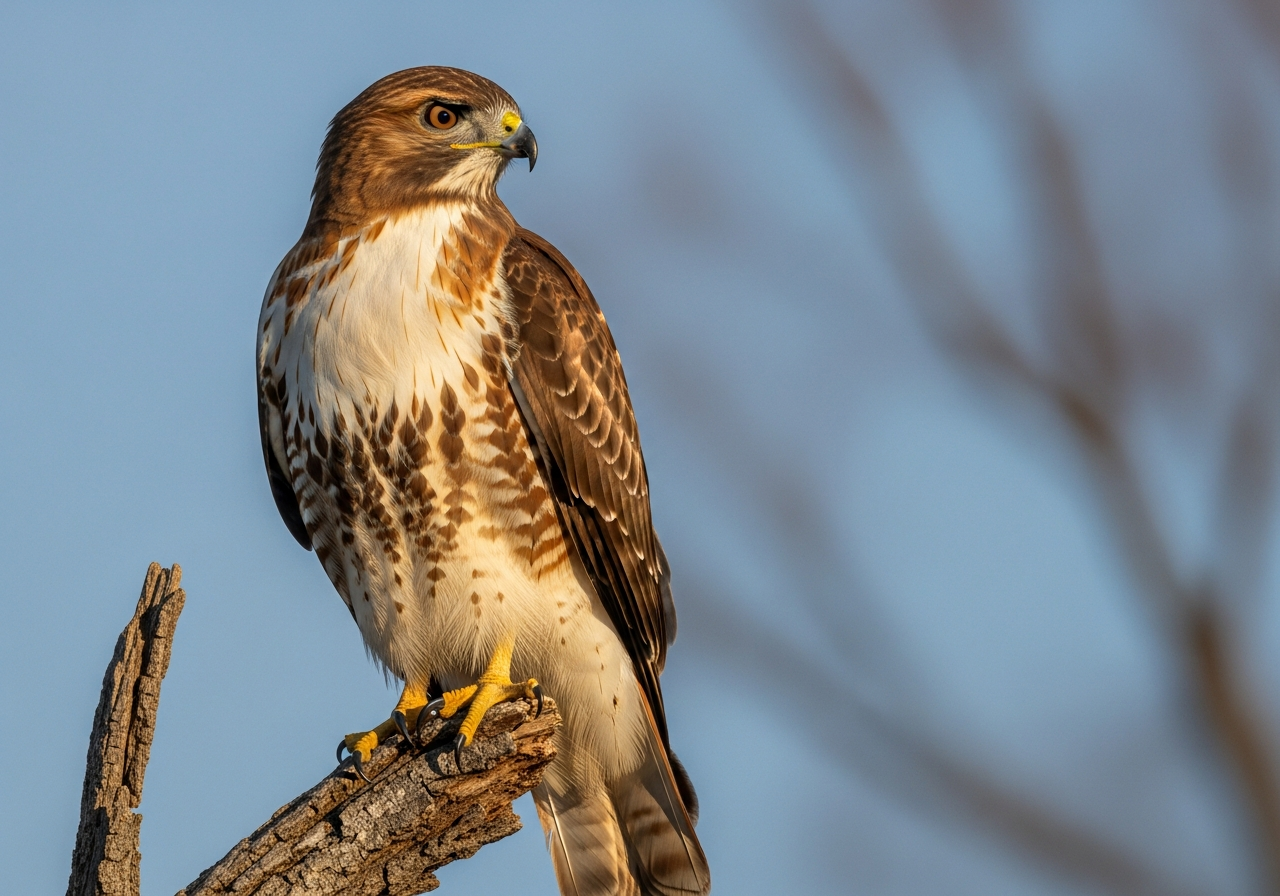
Bird
Least ConcernEcology and habitat
Both breed across North America near open hunting grounds. Eagles favour lakes and coasts; red-tails use fields, highways, and woodland edges.
Bald eagles are fish and carrion specialists twice the hawk's weight with massive talons. Red-tails hunt rabbits and rodents alone. Eagles kleptoparasitize hawks and usually win disputes.
Identification tips
Adult bald eagles have white head and tail; red-tails show a rusty upper tail from above and a belly band below.
Bald Eagle vs Red-tailed Hawk compared
| Attribute | Bald Eagle | Red-tailed Hawk |
|---|---|---|
| Weight | 6.3 kg | 1.2 kg |
| Length | 2.3 m | 56 cm |
| Top speed | 120 km/h | 190 km/h |
| Strength | 35/100 | 30/100 |
| Deadliness | 55/100 | 25/100 |
| Intelligence | 70/100 | 40/100 |
| Lifespan | 25 yr | 13 yr |
Bald Eagle vs Red-tailed Hawk: common questions
Who would win in a fight, a Bald Eagle or a Red-tailed Hawk?
In a hypothetical one-on-one, the Bald Eagle would most likely come out on top in most encounters, thanks to its more dangerous natural weapons. In reality, animals like these rarely meet, and both would usually avoid a fight. Bald eagles are fish and carrion specialists twice the hawk's weight with massive talons. Red-tails hunt rabbits and rodents alone. Eagles kleptoparasitize hawks and usually win disputes.
Which is bigger, the Bald Eagle or the Red-tailed Hawk?
The Bald Eagle is heavier, weighing around 6.3 kg compared with the other's 1.2 kg.
Which is faster, the Bald Eagle or the Red-tailed Hawk?
The Red-tailed Hawk is faster, reaching about 190 km/h versus 120 km/h.
Which lives longer, the Bald Eagle or the Red-tailed Hawk?
The Bald Eagle typically lives longer, up to around 25 years compared with 13 years.
Do eagles steal from hawks?
Yes — bald eagles often harass red-tails and other raptors for prey.
Which builds bigger nests?
Bald eagle nests can exceed 2 m wide and are reused for decades.
Sources & references
Conservation status follows the IUCN Red List of Threatened Species; size, weight, speed, and lifespan figures are drawn from Animal Diversity Web (University of Michigan Museum of Zoology) and Nowak, Walker’s Mammals of the World (Johns Hopkins University Press), cross-checked against each species’ own guide. Compare full profiles for habitat, diet, and behaviour:
- Bald Eagle — full guide
IUCN Red List (Least Concern, Haliaeetus leucocephalus)
- Red-tailed Hawk — full guide
IUCN Red List (Least Concern, Buteo jamaicensis)
-
Animal Diversity Web — University of Michigan Museum of Zoology
Life-history, morphology, and measurement data for Bald Eagle and Red-tailed Hawk.
-
Nowak, R. M. (1999). Walker’s Mammals of the World (6th ed.). Johns Hopkins University Press.
Standard reference for body size, weight, and life-span ranges.
-
Global Animal Guide editorial standards
How we research, source, and review wildlife comparisons.
Embed this matchup
Drop this iframe on your site — free for non-commercial use with the visible attribution link intact.