Image sourcing: see credits & licences
Quick answer
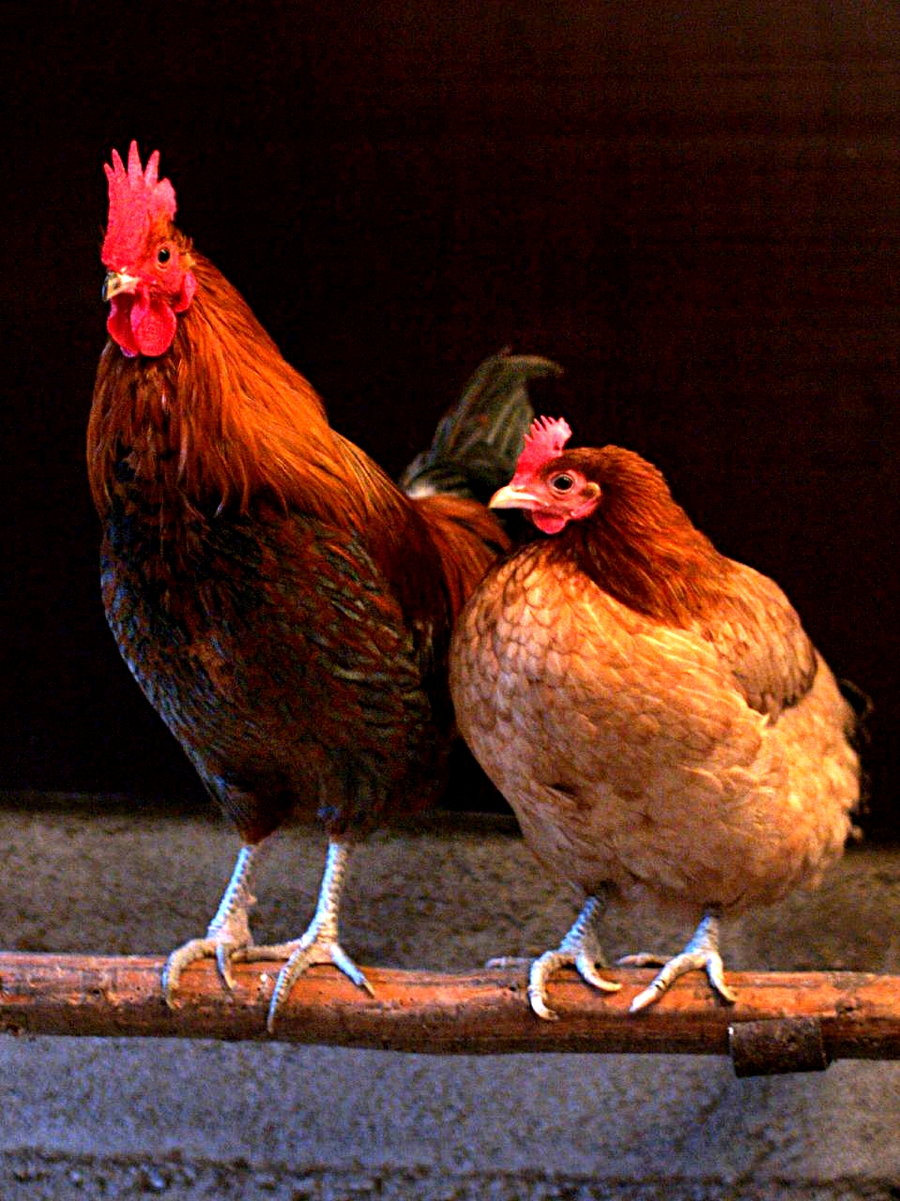
Roosters are adult male domestic chickens, descended from red junglefowl of Southeast Asia and bred for thousands of years for crowing, flock protection, and breeding. Weighing 2–4 kg (4.4–9 lb) with spurs and colourful plumage in many breeds, they guard hens from predators and announce dawn with loud crows.
Top questions about the Rooster
Also available in Español (Gallo)
Rooster facts at a glance
- Weight 2.5 kg
- Length 50 cm
- Top speed 15 km/h
- Lifespan 7 years
| Scientific name | Gallus gallus domesticus |
|---|---|
| Diet | Omnivore — grain, insects, scraps, and forage |
| Habitat | Farms, villages, and backyards worldwide |
| Lifespan | 5–8 years (breeding cocks often kept fewer years) |
| Weight | 2–4 kg (4.4–9 lb) depending on breed |
| Top speed | Capable short flight over fences; fast runner |
| Conservation status | Domesticated (IUCN) |
| Kingdom | Animalia |
|---|---|
| Phylum | Chordata |
| Class | Aves |
| Order | Galliformes |
| Family | Phasianidae |
| Genus | Gallus |
Where it lives
The rooster (Gallus gallus domesticus) is native to Domesticated from red junglefowl of Southeast Asia; roosters kept on farms and in villages on every inhabited continent. — recorded across Africa, Asia, Europe, North America, Oceania, South America in this guide’s range summary.
For occurrence records, see GBIF species search and sources below.
How big is a rooster?
An adult rooster measures 50 cm long — about 29% of the height of an average adult person (1.73 m) — and weighs around 2.5 kg, about 4% of an average adult’s body weight (70 kg).
Length vs an average adult’s height (to scale)
What is a group of roosters called?
Group name (collective noun)
A group of Roosters is called a flock.
Baby name
A baby Rooster is called a chick.
Explore more animal collective nouns and baby animal names .
Flock guardian
Roosters watch for hawks and foxes, calling alarms and confronting threats with spurs on their legs. They find food and call hens to share, maintaining order in the pecking hierarchy through display and occasional fights with rival males.
Crowing and circadian rhythm
Crows mark territory and respond to light — roosters often crow before dawn and throughout the day when challenged by distant rivals. The internal clock drives anticipation of sunrise even in constant light, though social cues from other roosters matter too.
Breeds and cockfighting legacy
Hundreds of breeds vary from bantam show birds to massive Brahmas. Historically bred for cockfighting — now illegal in most countries — modern roosters serve backyard egg flocks, meat production, and exhibition. Spurs can injure handlers and other birds if not managed.
Urban and suburban controversy
Backyard chicken keeping revives rooster ownership, but crowing brings noise complaints and many municipalities ban roosters while allowing hens. Hatchery chicks are often sexed, yet crowing adolescents still surprise urban keepers.
Dig deeper into the Rooster
- How Long Do Roosters Live?
Rooster lifespan is typically 5–8 years (breeding cocks often kept fewer years). What shortens or extends life, life stages, and status (Domesticated).
- Rooster Crowing And Circadian Rhythm
Roosters are adult male domestic chickens, descended from red junglefowl of Southeast Asia and bred for thousands of years for crowing, flock protection, and breeding.
- Rooster Flock Guardian
Roosters are adult male domestic chickens, descended from red junglefowl of Southeast Asia and bred for thousands of years for crowing, flock protection, and breeding.
- What Do Roosters Eat?
What roosters eat: Omnivore — grain, insects, scraps, and forage, foraging style, and seasonal shifts in Farms, villages, and backyards worldwide.
- Where Do Roosters Live?
Where roosters live: Farms, villages, and backyards worldwide, native range cues, and human overlap. Status Domesticated.
Explore the Rooster
Did you know? Rooster facts
- Roosters are adult male domestic chickens, descended from red junglefowl of Southeast Asia and bred for thousands of years for crowing, flock protection, and breeding.
- Light triggers their circadian clock, but they also crow to announce territory and respond to other roosters — not only at dawn but most prominently at daybreak.
- Some breeds and individual cocks defend flocks fiercely and may attack people or pets. Handling from chickhood and breed selection reduce aggression.
- Roosters are males with larger combs, spurs, and often colourful plumage. Hens are females that lay eggs and are typically less aggressive and quieter.
- Many cities prohibit roosters because of noise while allowing hens. Check local ordinances before hatching or buying chicks.
- Conservation: Domesticated (IUCN).
Diet & feeding
Rooster feeds primarily as a omnivore — grain, insects, scraps, and forage. Roosters watch for hawks and foxes, calling alarms and confronting threats with spurs on their legs. They find food and call hens to share, maintaining order in the pecking hierarchy through display and occasional fights with rival males.
Adaptations
- Roosters watch for hawks and foxes, calling alarms and confronting threats with spurs on their legs. They find food and call hens to share, maintaining order in the pecking hierarchy through display and occasional fights with rival males.
- Crows mark territory and respond to light — roosters often crow before dawn and throughout the day when challenged by distant rivals. The internal clock drives anticipation of sunrise even in constant light, though social cues from other roosters matter too.
Behaviour & ecology
- Roosters watch for hawks and foxes, calling alarms and confronting threats with spurs on their legs. They find food and call hens to share, maintaining order in the pecking hierarchy through display and occasional fights with rival males.
- Crows mark territory and respond to light — roosters often crow before dawn and throughout the day when challenged by distant rivals. The internal clock drives anticipation of sunrise even in constant light, though social cues from other roosters matter too.
- Hundreds of breeds vary from bantam show birds to massive Brahmas. Historically bred for cockfighting — now illegal in most countries — modern roosters serve backyard egg flocks, meat production, and exhibition. Spurs can injure handlers and other birds if not managed.
Communication
- Rooster uses calls and visual displays to communicate territory, alarm, and breeding status.
- Vocal repertoires vary by species and are often learned or refined during development.
Habitat & range
Farms, villages, and backyards worldwide
Ecological role
Rooster contributes to seed dispersal, insect control, or nutrient cycling depending on diet and foraging habits.
Conservation status of the Rooster
The rooster (Gallus gallus domesticus) is listed as Domesticated on the IUCN Red List. Domesticated animals are species kept and selectively bred by humans over many generations, such as dogs, cats, and livestock. They are not assessed for extinction risk in the wild by the IUCN, because their populations are managed by people rather than subject to natural pressures.
The rooster (Gallus gallus domesticus) is assessed on the IUCN Red List. Look up on the IUCN Red List .
Frequently asked questions about the Rooster
Why do roosters crow at dawn?
Light triggers their circadian clock, but they also crow to announce territory and respond to other roosters — not only at dawn but most prominently at daybreak.
Are roosters aggressive?
Some breeds and individual cocks defend flocks fiercely and may attack people or pets. Handling from chickhood and breed selection reduce aggression.
Rooster vs hen?
Roosters are males with larger combs, spurs, and often colourful plumage. Hens are females that lay eggs and are typically less aggressive and quieter.
Can you keep a rooster in the city?
Many cities prohibit roosters because of noise while allowing hens. Check local ordinances before hatching or buying chicks.
What did chickens evolve from?
Red junglefowl (Gallus gallus) of Southeast Asia — domesticated roughly 8,000 years ago in multiple regions for meat and eggs.
What is a group of roosters called?
A group of Roosters is called a flock.
What is a baby rooster called?
A baby Rooster is called a chick.
Sources & references
This guide is compiled and reviewed against established zoological and conservation references. Key sources for the Rooster:
-
IUCN Red List of Threatened Species
Conservation status (Domesticated) reflects the IUCN Red List category for Gallus gallus domesticus.
-
iNaturalist — observations & photos
Search citizen-science observations and community IDs for Gallus gallus domesticus. Useful for range checks and recent sightings — not a substitute for formal Red List status.
-
GBIF — occurrence data
Global Biodiversity Information Facility species search for Gallus gallus domesticus. Explore published occurrence records used in range research.
-
eBird — bird observations
Cornell Lab eBird target search for Rooster. Check recent checklists and seasonal abundance where birders report this species.
- IUCN Red List — Gallus gallus domesticus.
Conservation status (Domesticated) and population trends.
- Animal Diversity Web — Gallus gallus domesticus. University of Michigan Museum of Zoology.
Life history, morphology, and range.
-
Global Animal Guide editorial standards
How we research, source, review, and update every guide for accuracy.